Tag Archives: Lancashire

THE GARDEN IN SEPTEMBER.

I’ve been away most of September and the garden is looking neglected, but to continue my year’s diary…

Hedges need trimming and plants cutting back. Not a lot has changed since the end of last month and we are now slowly drifting into Autumn.

Sedums come into their own at this time of year.

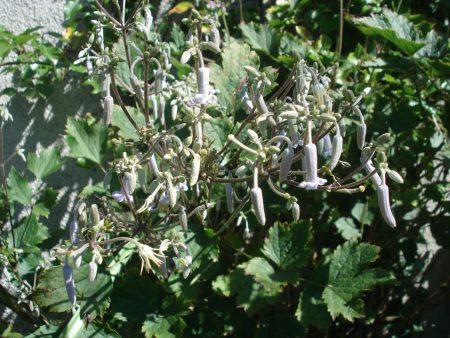
As do Michaelmas Daisies [asters]The Monkshood [Aconitum carmichaelii] seem to have grown taller this year, they are probably the most poisonous plant in the garden.Cimicifuga simplex racemona brightens up a shady cornerand a late flowering Phlox paniculata Norah Leigh does the sameThe less showy Physostegia virginiana, the Obedient Plant named because it will stay in any position you twist it to, makes an effort to flower.

Otherwise it is seeds and berries.

The Cornus kousa fruit soon goes off but apparently can be used for making wine – next year.The birds love the Cotoneaster berriesand my Monkey Puzzle tree has started producing ‘cones’

But really we are heading into Autumn.


BEWARE OF THE GRUFFALO.

If you go down to the woods today you may be in for a big surprise.

Today was another short walk taking advantage of a sunny afternoon and celebrating the plastic bag man‘s birthday. The real reason was a birthday curry buffet at a favourite restaurant, Bangla Spice in Leyland. One of my sons joined us for the laugh, the day before I’d been on the streets of Stretford following a jumble sale trail with my other son and family.

Cuerden Valley was our venue having never really explored here before. The area was popular with dog walkers and families all enjoying the space and sunshine. We had a rough map of the park and set off along a path that soon had us crossing the busy M6 motorway, not a peaceful start.

But before long we were walking in a strange walled path towards the hall, we imagined the masses walking to work in the past.

The hall itself, not an edifying building, was approached. This is the centre for the Sue Ryder Charity. We found in the stables area of the hall several good charity shops – books, brickabat and clothes – all for a good cause, neurological care and support to local people and their loved ones.

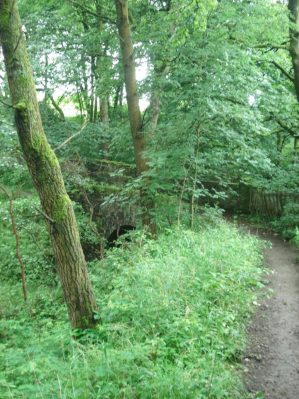
Onwards past hidden housing estates, the offices for Lancashire Wildlife Trust and a walled garden to the woods where a Gruffalo hunt had been underway. Thankfully this was over and the big G had gone home. Plastic bag man still felt a little uneasy, mouse-like, as we entered the mature woodland. There was a wide range of trees planted by the estate a century ago.

Going into an interesting looking nature reserve we were accosted by a volunteer suggesting there was no entry, we didn’t argue [there is always another time to explore unnoticed.] We meekly walked down to the bridge over the River and followed the masses and their dogs.  Another carpark was reached and we crossed the road to continue down valley, it was here we got bored and hungry and decided to retrace our steps. What lies down the valley will have to remain for another visit. The whole area is worthy of further exploration.

Above us on the return was the new visitors’ centre, an impressive Eco-designed building, which will be worth a visit soon. Further on was the fishing lake, an old lodge.

Paths took us back to our carpark and that tasty curry.                                                                                ***


A BREATH OF FRESH AIR.

I’ve spent a couple of rather fraught days planning and booking up and coming trips and this afternoon I felt the need to break free and walk up the fell. The weather since I’ve returned from France has been atrocious but today there are blue skies in between the showers.

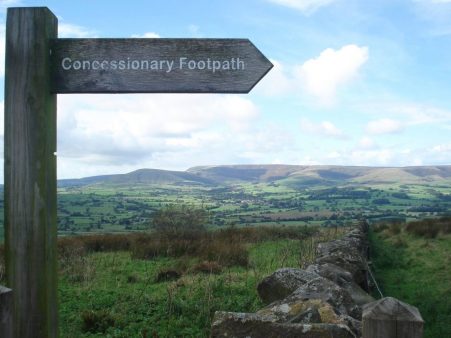
I park up at Cardwell House on Jeffrey Hill. The signpost at the fell gate says ‘concessionary path’ but is clearly marked on the OS map as a public footpath. My mind immediately goes into conspiracy theory mode made worse by the newly erected grouse shooting butts nearby.  Anyhow the path, concessionary or not, leads up the fell. Fields in the Vale of Chipping below are flooded. Ahead clear visibility shows Penyghent and later Ingleborough.

The best of the heather colour has gone and the ground is wet, I’ve seen worse but not necessarily in September. There is a lot of water flowing from the little spring passed on the way.

The air is fresh, north westerly. As I walk up to the trig point views open up in all directions. What a great sense of freedom up here, why don’t I do this every evening? At one time when my resolve was stronger I did.

Walking back down a different way I was pleased with new forest clearings and planting of some deciduous trees making the area more attractive.

The car park on return was quite busy yet I saw no one on the fell, strange. Less than an hour’s stroll but all that fresh air has put me in a far more positive mood. Tomorrow evening…

THE GARDEN IN AUGUST.

I’m not going to mention the weather. To be honest the garden doesn’t look a lot different this August from July but there are some interesting additions.

Many of the flowers from July are still showing, the Japanese anemones have a long flowering period…


… the Hemerocallis, Day Lily, has only a short one – as its name implies.One of the shrubs essential to any garden is Buddleia davidii not only for its fragrant blooms in late summer but for the butterflies it attracts.

Three more unusual plants in my side border are Crinum powelli,  Clematis heracleifolia and Cautleya spicata ‘Robusta’ [Himalayan Ginger]

Far less showy but giving good ground cover in rough shady areas is Persicaria campanulatum. The humble Montbretia has many varieties, all a little invasive, one particular favourite of mine is Crocosomia solfatareI have other varieties of this easy plant 

In my boggy area I grow this interesting plant, Kirengeshoma palmata, which is just coming into flower.

A small uncommon tree, Clerodendrum trichotomum, at this time of year develops strange fragrant flowers.  

The Fuchsia papoose is showing its colourful bells  and who knows with a little more sun plants like Helianthus Lemon Queen will brighten up the end of the month.

Anyhow back to cutting the privet hedge.

NO PARTICULAR PLACE TO GO.

Three of the blogs I follow all had ‘Adventure’ in their titles today, that’s the last thing that can be said about mine.

After lunch when the sun finally came out I needed a walk; didn’t want to drive anywhere, didn’t want to go in the wet fields so a local road circuit was ideal. This circuit of just over 4½ miles used to be one of my regular winter runs. I never did get below 35minutes. Today I was happy to see what was of interest on the way – no particular place to go.


At present there is so much housing development in town causing road closures and diversions. All the traffic is now coming down, the normally quiet, Halfpenny Lane at an alarming rate and causing queuing for heavens sake. Traffic becomes one of today’s bugbears, thats a strange expression. It is whizzing dangerously past me at 60mph in a 30 limit as I set off and continues to do so onto the main road, I felt uneasy when I shouldn’t have to. Too many cruising along rapidly with their radios on full blast. At one point the pavement was blocked by an overgrown hedge and stepping into the road was a scary experience. I think I’m going to avoid this stretch from now on, the automobile has taken over. I know I’m an old moaner but what have we allowed to happen to our villages and lanes, I can only see it getting worse. Who wants this hectic life?

Thankfully I entered Back Lane and all was peace and quiet by the cattery, must be a great life.

Other catteries are available – I have used David and Rita’s Champion Kennels nearby for 20 years. Amusingly I was on holiday last year with a couple who use Purrfection and their cat sent them a text message halfway through saying he was OK. I complained to my cat, in Champion, about his lack of thought but got no sympathy.

In the grounds I caught a glimpse of one of those old railway cabins used for storage on many farms and small holdings after their life on the track was over. Where did you buy them from?Along the lane a farmhouse, date-stone 1782, is being renovated and provides a contrast to its more modern extended neighbour. Ashley Lane winds through the fields with distant views of Parlick, Fairsnape and Longridge Fell. Overhead a pair of buzzards are wheeling and crying, there seems to have been an increase in these majestic birds in the last few years around here. My phone is not capable of capturing their image. The afternoon drifts on and I spend time picking and eating blackberries from the hedgerows though I didn’t have the patience to collest enough for a pie.  I spot an Inkcap Mushroom in the verge; these are edible when young, but react badly with alcohol as they contain the Antabuse chemical, I recall from my foraging days when I enjoyed them on toast.The occupant of this house obviously has a tractor obsession. They all looked pristine, there are lots of tractor shows in Lancashire.

I have commented on these pigs before, hog roast tonight?

Now heading home on Inglewhite Road the traffic increases once again and the tranquility of the countryside vanishes. I think tomorrow a fell walk would be preferable.


LECK – a day out with Tilley.

Things don’t always work out as planned, today’s walk was one of those.

In the past I have often explored Leck Beck from the village up to Ease Gill and remember the dramatic scenery particularly in Ease Gill Kirk. We would often finish the day with some simple cave exploration on the fell, Short Drop and Lost Johns Caves stand out in my memory. So when the Pieman and his little brother Will [all is relative] suggested a revisit I was keen to join them. Out came Wainwright’s Limestone book with the relative chapter, maybe we could also throw in an ascent of Gragareth.

The day started well as I parked up next to the church and donated them a pound , cheaper than those car parks in the Lakes. We met up promptly but there was an unexpected addition to the team – Tilley the spaniel, Will’s beloved dog. This didn’t seem a problem as she was on a lead and appeared docile enough. Off we went catching up on events in our separate lives and reveling in the lovely weather. Tilley trotted alongside. Only when we into more open country did I realise that Tilley could run Will a merry dance, despite being on one of those retractable leads when she decided to explore off route Will seemed to have to run after her.  Hilarious.

The valley was longer and more beautiful than we remembered. Certainly longer for Will dragged aside by Tilley. By the time we reached the interesting Ease Gill Kirk my plan to drop into it to explore further didn’t resonate with the brothers plus dog and they left me to it. Feeling rather abandoned my visit was only cursory and I didn’t see what I wanted. The whole place seemed overgrown and unreconisable, I’ll have to return without any pressure.

Reunited for lunch we discussed the way on, the dog team won and we climbed up the hillside, now resplendent in purple heather, towards the road near Leck Fell House. This must be one of the loneliest places in Lancashire, yes we are still in an outpost of Lancashire despite the ‘dales’ feel to the area. I didn’t have the heart to inform the other two they were not in their beloved Yorkshire, they might have panicked. Potholes were all now fenced off and I didn’t have the time to find my favourite, Short Drop Cave. I used to enjoy dropping into it, it was only a short drop once you knew it, and going down the water worn passage was easy for some distance.  Apparently the dog was tired so our ascent of Gragareth was dismissed. At least we made a cursory exploration of the area of Lost Johns Cave, a stream entrance was obvious but today there was too much water  and too little enthusiasm for further probing.

Back on the road it was a delightful walk back down to Leck with Tilley showing no further signs of fatigue lead the way. The scenery hereabouts triumphed over my frustrations as we arrived back early at the car.

I would like to make it clear I have no malice towards the lovely Tilley, as they say it’s not the dog’s fault  it’s the owner’s.

A map of where we did and didn’t go…

FAIRY HOLES CAVE – WHITEWELL.

My stereotypical image of prehistoric life is of a family sat eating round a fire, animal bones scattered about, in the mouth of a cave. Hence, this morning I found myself sat in a cave entrance high above the River Hodder near Whitewell living the dream. Fairy Holes Cave was excavated in 1946 and more recently in 2013 and has revealed cremated human bones, animal bones and pieces of pottery dated to the early Bronze Age. I had not been here for maybe 35 years when I had come to show my children the virtually unknown site. I remember it took some finding and was on private land – it remains so to this day. Once located there are three caves in a limestone outcrop, the middle one being by far the most extensive. A high entrance leads to a 25 m long cave which you need to stoop along until at the furthest point a phreatic tube allows you to stand again. My head torch only allowed a poor view of the features, but I was hoping some photos would show more. Having satisfied my speleological desires I clambered up the hillside and continued on my walk through this limestone area of Bowland.


The early morning start north of Chipping saw me parked up at the end of a bridleway, now a surfaced lane, leading to a prominent Lime-kiln on Knott Hill, this was used to provide lime for the fields and mortar. Throughout this walk little outcrops and quarries of limestone are discovered.

The tracks onwards to Lickhurst Farm were waterlogged reflecting the amount of rain we’ve experienced this summer. Got chatting to the weathered farmer, whom I knew from a previous life, about these isolated Bowland Hill farms. He is due for retirement soon and is one of the last generation born and bred in the area. So many buildings, farms and barns have been upgraded for a new breed of incomers. The property next to him which seemed derelict a couple of years ago when I passed through now offers luxury accommodation. We speculated, with a smile,  on how they will manage cut off in the next harsh winter – no doubt helicopters will be involved and the TV will report on a survival rescue.

Lickhurst Farm.

The next stretch through more  wet fields passed farmsteads, Dinkling Green and Higher Fence Wood, amidst curious Limestone Knolls surrounded by the Bowland Fells:  a juxtaposition  of grit and lime. Hereabouts I had heard of caves but never found them, I wandered about in vain for a while and was on the verge of giving up when I spotted a fenced enclosure, a give away really. There it was – an obvious cave opening in an outcrop. It turned out to be a few cave entrances to a system which looked as though it extended down into deeper passages – not for me alone today. Has this cave a name I wonder?

Down the lane and across fields towards a small quarried outcrop which I remember bouldering on years ago and which is now in the definitive Lancashire Bouldering Guide named appropriately Reef Knoll Crag.

Anyhow, passing quickly onwards I arrive in the farmyard of New Laund where workers are busy sorting sheep. Nobody notices my diversion to Fairy Holes…

… my continuation over New Laund Hill gives views back to ‘The Jaws of Bowland’ with Mellor Knoll, Burholme Bridge and the Whitendale Fells prominent. Ahead is the deep wooded valley enclosing The Hodder with the slopes of Longridge Fell behind. Some creative navigation through Fair Oak put me on the right track to Greystonely, another farmstead with converted buildings, the one whose residents I knew were out so no cups of tea! The bridleway over a ford quickly took me back to my car, and I was home for lunch.

*****

STOCKS RESERVOIR – THE LONG WAY ROUND.


There is a ‘new’ circular walk around Stocks Reservoir, promoted by United Utilities, from the Gisburn Forest car park and judging from the amount of people seen today very popular. I came across it on a walk from Slaidburn. New paths have been created giving a varied route with fantastic views and close to the water wildlife viewing hides are available. Stocks was constructed in the 1920/30s by the Fylde Water Board by flooding the upper Hodder valley, the surrounding farmland and the hamlet of Stocks-in-Bowland. 500 men worked there and a narrow-gauge railway was built to transport materials. According to the information boards, numerous attractive houses were lost but the church was rebuilt above the water. For more fascinating reservoir facts click here. 

I always enjoy the Roman road from Cow Ark to Newton, I drive this way to reach the Slaidburn area and as a scenic route to Yorkshire. As you crest the hill the Bowland Fells are prominent to the west and straight ahead is unmistakable Ingleborough, if you are lucky and the day clear. Today I was debating a walk up Croasdale to Bullstones but I knew I would be tempted onto the boulders which wouldn’t be good for my shoulder so I opted for a walk up to Stocks reservoir.

Slaidburn is an interesting old village to wander around. Most of the property has been owned by one family for over 200 years and little has changed, narrow streets, hand-loom weavers’ cottages, an historic pub, village shop, YHA, war memorial and the River Hodder. I must admit to have not visited the C15th church on the outskirts.

This morning I used the village car park and adjacent cafe as my starting point and walked out on a lane heading to Bentham which seemed very popular with cyclists who have a lot of climbing ahead. A style leads into a field and a climb over a hill which you realise is Limestone, there are a lot of Reef Knolls in the area. A string of Dale’s like meadows parallel the Croasdale Brook, each having a stone barn in various states of repair. These reminded me of the phrase “were you born in a barn?” that was constantly directed at me as a child for leaving doors open.

The farmer from Croasdale was proud of his new concrete access road as he drove around on his buggy with trusted sheepdog.

Climbing out of the valley the views across Bowland improved with every step. Newly sheered sheep were out in the fields creating a loud communal baaaa. The short stretch of road walking was virtually traffic-free and there seemed to be a ditch and dike running alongside, no idea of its origin. Up on Merrybent Hill, Ingleborough raised its head again and the vast extent of Gisburn Forest was spread out below.

Bowland Fells.

Ingleborough.

Gisburn Forest.

A line of Alder Trees followed a stream downhill off the road and this is where I met up with the Stocks Circular walk and a stream of people. Flags had been laid over a boggy stretch and where last time I had precariously crossed the Hodder on stepping stones there was a new [2008] footbridge. Shamefully the stepping stones seemed to have disappeared.

Onwards and upwards past the deserted New House with its outside well. The lane leading down from here gave views of Stocks Reservoir with Totridge Fell in the background. All to soon I was into the forest but the path has been improved and winds its way nicely through mixed woodland.

Alongside the start of the water I went into one of the hides, opening up the flaps I had a perfect view of the Hodder snaking into the lake; unfortunately without binoculars, I struggled to identify most of the birdlife except for the numerous Cormorants. Nonetheless it was a good place to eat my lunch.

Continuing on I reached the car park with all the information boards and more people doing the circuit. The causeway was crossed, on the water little boats used by fishermen seemed to be having a hard time in the brisk wind. In the past I’ve walked on the road past the re-sited church but now a path winds off through the trees to keep closer to the reservoir. The next mile on open ground above the water gave magnificent views across the reservoir with the Chipping Fells ahead and behind to the forest. The signed walk brought me up close to the dam wall with the splendid waterboard house above. Not wanting to cross the damn I found a bit of a path upwards to join the track down to Hammerton Hall, a commanding three gabled Elizabethan house. After Holmehead Bridge crossing the Hodder fields headed towards Slaidburn. I was reminded of a previous trip down the Hodder when not checking the map we forded the Croasdale Brook in a direct line under the view of the farmer who said we were on private land and sent us, humiliated, back across the river. Today I found the correct path to the right to reach the bridge and road back into the village.

Sorry, this has been a long-winded blow by blow account of today’s walk but there was so much of interest. I have every intention of returning soon, with binoculars, to walk that shorter signed Stocks circular.


THE GARDEN IN JULY.

Continuing my monthly diary of the garden.

On the TV weather this evening Daren Bett has just announced  “there’s something wrong with the weather at the moment” and I have to agree with him. Most of my garden posts have started with the same complaint. In the last few days we have experienced, in a random order, everything it can throw at us. The winds today made photography of my poor flowers difficult and its getting to the end of the month.

The Hostas which give good leaf colour all season also produce stately flowers.In amongst them grows the everlasting pearl white flowers of Anaphalis triplinervis  Summer Snow, aptly named.Another unusual white flower appears in my pond – Houttuynia cordata ‘Plena’

My geraniums continue to flower and Buxton’s Blue is showy this month.The Japanese anemones have started flowering and will produce blooms for the next month or so.

This hydrangea hovers between pink and blue…… whereas this lace cap is a lovely shade of white.Far more brash is Crocosmia ‘lucifer’.and this orange/pink Phlox

In my Monkey Puzzle tree grows Clematis ‘Praecox’ which always draws comments from passing pedestrians as it hangs out into the road.Blues still dominate the colour schemes

A delicate shrub is flowering with pea like flowers, Indigofera pseudotinctoria from China.

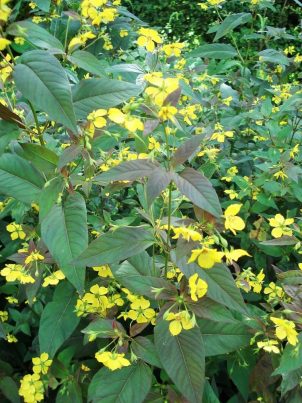
Whilst elsewhere some of the showy yellow flowers of summer are beginning to dominate parts of the borders Inula hookeri and Lysimachia ‘Firecracker’

Lets hope for a drier warmer August to bring out those colours.

THE BURNLEY WAY. Day Five.

Portsmouth to Towneley Park.

If you google Burnley to Portsmouth by bus you can imagine the result –  a ten hour journey to the south coast. Today’s more modest journey went like clockwork, leave home 9.45, park up at Towneley Park, 10.43 bus to Burnley bus station, 10.55 bus to Portsmouth [the one in Cliveger Gorge] and I was walking back into Lancashire by 11.30. I’m becoming a bit of Burnley Bus nerd. The weather today was perfect for a change.  A track climbed steeply from the main Calderdale road and headed into the hills, unusually it was unmarked. Roe deer ran before me and disappeared in the bracken, only their barking could be heard. This was steep climbing and I was soon looking back down into Calderdale and up to distant Stoodley Pike.

Once above a remote barn conversion a smaller path made a beeline for Heald Moor.  A rough track then led along the ridge to Thieveley Pike which was marked by an Ordnance Survey Pillar, 449m,  the highest point on the BW. This was the essence of open Pennine walking just me, skylarks and cotton grass.

Halfway along the ridge was a stone marker plaque who’s origin I cannot find, any ideas?


The extensive views were back to the Coal Clough Windfarm, down Calderdale to Stoodley Pike and The Peak District, Lancashire Moors, Hameldon Hill, distant Bowland and then Pendle and the Three Peaks and more of Yorkshire…

  A subsidiary ridge went over Dean Scout Rocks  which made a convenient lunch stop looking down into the Cliviger Gorge. A steep track descended through more sections of the Burnley Forest. Going under the railway I joined a section of the Pennine Bridleway, this turned out to be a delightful peaceful pastoral passage past old farms on what must be an ancient track. Ripe raspberries in the hedgerows were a bonus.

I was circling a hillside plantation named the Fireman’s Hat though I couldn’t see the resemblance, this has been made even worse by a communication tower which has somehow been allowed to be placed in this prominent natural position, money must have changed hands. I walked my way through Walk Mill and payed a quick visit to the Barcroft Hall a 17th century building. Interestingly there was of those old American caravans in the garden.

I then entered the extensive grounds of Towneley Hall and met the masses enjoying a sunny day, children and dogs included. There are paths and avenues everywhere. An ice-cream van by the bridge over the Calder River was doing a good trade and I couldn’t resist a cornet. A stroll  past the hall itself, note to visit in future, and then up a mature lime avenue to the gates on the main road and my car.


So I’d completed The Burnley Way, in more days than planned and in poor summer weather conditions but had thoroughly enjoyed the experience. Met some lovely people along the way. Good varied walking with fascinating natural and industrial features in an area not known for its walking. My photos don’t do it justice. It is well waymarked and the guide leaflets from Burnley Council clear and accurate. I had learnt a lot more of this area and I highly recommend.


THE BURNLEY WAY. Day Four.

Worsthorne to Portsmouth.

Rain all morning, once again the summer weather had conspired against me but rather than be inactive I opted for another short stage. My lunchtime arrival in Worsthorne coincided with a brightening but showers were still in the air, however I didn’t need waterproofs for the rest of the day. A flagged path across a field took me into Hurstwood described as a delightful Elizabethan village with attractive buildings – most seemed to be under renovation at present so I didn’t dally. A lane crossed the infant River Brun which I had come across a couple of days ago in Burnley centre. The now cobbled lane passed isolated farmhouses onto the moor, I pondered on the man-hours  needed to construct these old highways. Dropping down into Shebden Valley the reason for the lane became apparent – an extensive area of quarrying. Apparently this was for limestone extraction using hushes and what remained was piles of unwanted stone, the sheddings. I joined The Pennine Bridleway at the bridge but for some reason I was directed to a smaller path into the workings, this soon became indistinct and my wanderings were more and more erratic until I hit the Long Causeway road.  [Stay on the bridleway!] This straight road possibly dates back to the Romans and was used as a packhorse trail in the 18th century. It is characterised now by the Coal Clough Windfarm which it runs alongside, I remember this as one of the first in this area. From up here Pendle dominated the skyline to the north.  At a corner a farm track continues on the original line and I just followed this although the footpath supposedly takes to the field. Another isolated farm is passed and a lovely little building which would make a good bothy but more likely an expensive holiday cottage.

The path traverses above a wild clough and passes through plantations which are part of The Forest of Burnley a lottery funded scheme to create new forest around the area, I had noticed secveral others on these walks. Pathfinding through the new plantations is not always easy and waymarking could have better. I found myself on the top of a gritstone cliff, Pudsey Crag according to the map, a diversion was taken to view it from the valley. It looked worthy of climbing but is apparently out of bounds on private land. Deep wooded cloughs are entered as one progresses towards the Cliviger Gorge, occasional cottages appear out of nowhere – this is a secret place. Coming out of one of the cloughs towards Brown Birks farm I was confronted by a large brown bull right on the track, I was so overawed I didn’t even get a picture. Backtracking I picked up another footpath circumnavigating the field and with a bit of ingenuity safely avoided the bovine obstacle. I was now dropping into Cliviger Gorge and looking at the climb out on the otherside which will start my next stage. Looking down were the back to back terraces of mill villages Cornholme and Portsmouth. I jumped on the bus to take my me back to Burnley but found it pulled off the main road to visit some smaller villages and I surprisingly saw I was only a mile from my start so I was dropped off and walked into Worsthorne. Another day of discovery.

THE BURNLEY WAY. Day Three.

Briercliffe to Worsthorne.

Another shortened day to accommodate the weather. I was back at Queens Mill and no sign of it opening to highlight Britain’s last remaining steam mill engine. Mill streets led to allotments and hen houses on the edge of town. The Parish Lengthsman pulled up and switched off his engine for a chat. He had been watering flower displays and was now off to do some path strimming. Throughout history lengthsmen have been employed to keep parishes tidy and the post has been revived in recent years to provide on the ground local maintenance.  We found we had mutual friends in Longridge and our chat covered many topics, he didn’t seem in a rush to get to work and I’m never in a rush when local knowledge can be gained.

Eventually I crossed several field to arrive at the grounds of Happa [Horses and Ponies Protection Association] and their modern cafe, as you know I won’t willingly walk past a cafe so I found myself inside enjoying a good Americano. Others were tackling mammoth portions of fish and chips, the cafe has a loyal local following. As you would expect horsey types were in strong evidence.

Skirting horse enclosures and then fields full of inquisitive cows I then began  descending towards the Thursden Valley but became a little entangled in boggy grounds and barbed wire fences – the way marking could be better. The valley itself is like a lost world with a small brown peaty brook meandering along. A path of sorts pushes through the sedges with occasional clumps of purple orchids and lots of meadow sweet. Horsetails seem to be trying to affect a takeover in some areas.

I came out onto a road with steep lanes leading into it – I recognised the situation from when we used to drive over to Widdop for a climbing session. The road leading out of the valley always appeared steep and exposed with a car seemingly wrecked down the slope to the left. I was amused to see its rusting form still there today.

A steady plod up the wild road and a descent brought me into Yorkshire with views down to Widdop Reservoir and the crags we so often climbed on. Prominent at the right-hand end was Purgatory Buttress, home of some classic extreme climbs. I was always attracted to the Artificial Route up the front and despite its scary moves was often drawn back to it. Below it are some beautiful boulders for a more relaxing if not taxing time.

Off the road a little track headed through the heather towards a stream where I found an ideal lunch spot. A Blackcap settled in the vegetation in front of me. A boggy section headed across the valley to join a distinct bridleway which climbed above Widdop Reservoir and onto open moorland close to Gorple and Hare Stones. More reservoirs came into view and Stoodley Pike was prominent across the Calder Valley. This track seemed very isolated today not another soul in sight and a rather broody sky.

…not another soul insight…

Distant Stoodley Pike.

A family of chirpy Wheatears were running on ahead of me. Burnley soon came back into view and you realise how close to the town this circular walk keeps returning. Down to my left Hurstwood Reservoir appeared where the route heads to but rain was in the air so I just continued straight down the bridleway into Worsthorne , with some interesting houses, for the bus, Hurstwood can wait till next time.

Hurstwood reservoir.

As I came down the track a mountain biker was heading up which reminded me of a ride I did with my teenage son many years ago on a long loop to Hebden Bridge and back. That was just at the beginning of the mountain bike revolution.


While on the subject earlier in the day I passed signs for a MB charity challenge, in a very good cause, from the previous weekend – why have those responsible not removed these by now. I consider these as litter once there purpose is over. Shouldn’t have ended the day on a sour note.

Name and shame.


THE BURNLEY WAY. Day Two.

Hapton to Briercliffe.

I must have been somewhat dazed when I left Hapton Station as within 15mins I was lost and heading back almost to where I started but once orientated I made a direct route into Padiham where I stumbled into an unexpected cafe [the Belly Buster] for coffee.

Anyhow after the coffee break my brain kicked into action and I was soon following the River Calder out of Padiham and into the Grove Lane Greenway. All peace and birdsong, it is difficult to imagine this area amongst the trees  hosted a coal colliery relatively recently . Across the fields was Burnley F.C. training ground and also Gawthorpe Hall. The latter is the end of The Bronte Way from Bradford which I hope to complete with Sir Hugh later in the year when he is fully recovered.

River Calder.

What looked on the map like a riverside path turned out to be a tarmacked lane so I made good progress. The day was overcast and warm, I seemed to be sweating profusely and not feeling good.  For no obvious reason I started to have a longing for chips. Were the two connected?

At a bridge across the Calder near an old ford, lots of sand-martins flying low, I met up with the said Bronte Way and also the Pendle Way [completed not without interest 20 years ago – another story involving the Mountain Rescue when I didn’t need rescuing.] Climbing steeply out of the valley the paths seemed to be little walked but the signing remained good and I kept on course. Mention of Pendle made me realise I had not seen this dominating hill today in the poor visibility but there across the valley it appeared out of the mist.

A series of horsey fields were traversed and suddenly I was looking down into the sprawling mass that is Burnley. Urban parks by the river led past a Holiday Inn, a holiday in Burnley? and down to join the towpath of the Leeds Liverpool Canal. This goes into the heart of Burnley and an area named the Weavers’ Triangle – a collection of 19th century mills and warehouses from when the town was a major cotton-weaving centre. There are ruined buildings and alongside renovated ones providing office and living spaces. Several weaving sheds were still visible with their distinctive sawtooth roofs giving Northern light. A covered wharf appeared and next to it a pub in a converted warehouse, The Inn on the Wharf. Despite the fact that I was carrying lunch the craving for chips got the better of me and I was soon sat with a pint of Copper Dragon, a salad sandwich and a portion of home made chips.

Burnley appears out of the murk.

Back on the canal after a couple of turns and more derelict wharves and mills you come to the ‘Straight mile’ where the canal runs along an embankment 60ft above the town. Easy walking with views to the new developments in town to the left and Turf Moor football stadium to the right. I am reminded of the former great days of Burnley FC with the outspoken Bob Lord at the helm, they won the league in 1960 – oh happy days. What struck me most about this stretch of the Leeds – Liverpool Canal was that there were no boats which is at odds with most stretches of our inland waterways. At the end of the embankment the canal crosses the river Brun [said to be the origin of Burnley’s name –  Brunlea]  A double back under the canal takes you into the Brun Valley Park a greenway leading out of town. A large part of this area was a former colliery though you wouldn’t know it today with all the mature trees in new parkland. Rather crudely carved wooden marker posts served this stretch of the Way bringing me out at Netherwood Bridge though there seemed a multitude of alternative tracks through the muddy woods. Hereabouts I took a more direct line up to the equestrian farm, busy with girls grooming horses and mucking out vast pile of manure. Further up the hill the Burnley way was rejoined for a stretch downhill into a hidden valley, orchids were plentiful on the damp meadows. At the bottom there was a little footbridge over the River Don, a stream really. What a lovely spot for a lazy Summer’s day – oh I had forgotten it is Summer.

A series of old stone flagged steps lead out of the valley, these steps go by the local name of Ogglty Cogglty whose meaning has been lost in time. At the top of the steep slippery ascent indistinct field paths go up towards Queen’s  Mill in Harle Syke. This large mill in a side street apparently is the last working steam powered mill but it all looked very closed to the public today.

To be continued…

THE BURNLEY WAY. Day One.


Towneley to Hapton.

I had chosen Towneley Hall as a convenient starting point for the 40mile Burnley Way which I’d broken down into three days’ walking. I’d obtained an excellent leaflet guide from Burnley Council which detailed the walk very well and it is marked on the 1:25,000 OS map OL21. I could see that a radial bus service would ease getting to and from daily start and finishing points, living so close it wasn’t worth paying for B and B.

A late start and a shortened day to let the morning’s rain abate. On the no 483 bus this morning was a man in full golfing regalia with trolley and bag so I knew we had arrived at Towneley Golf Club when he got off. I could have been anywhere but crossing the road I came across the first of the BW waymarks with the birds beak giving the direction up a little lane. I couldn’t make out the coke ovens which were supposed to be hereabouts but soon came across an art installation, part of the Wayside Arts Trail, a red brick kiln which is sadly falling apart or has been vandalised – a depressing thought. I realised I’d forgotten my camera so out came the phone.


Onto an affluent housing estate old tracks passed between properties, not the terraced housing one associates with Burnley, this is the west side of town.  Crossing a busy road I climbed up the hillside and was immediately looking down on the town and its moorland surroundings, this view was shared by the golfers I joined on an interesting looking course. I navigated my way between greens and across fairways without causing too much trouble and out onto the open fell. Up here apparently was the site of an Isolation Hospital serving smallpox and scarlet fever at the beginning of the 20th century and later TB patients, it was certainly isolated, how things have changed in a hundred years. Away to the left was the Singing Ringing Tree a well known sculpture I’ve visited on other occasions, its a shame it was not incorporated into the BW by following the Arts Trail. 

The Singing Ringing Tree from a previous visit.

Downhill in poor visibility towards Clowbridge Reservoir to cross another busy Pennine road linking the mill towns of the area, this one was heading to Rossendale I think. By the road were signs of previous mining activity with adits going into the hillside, this turned out to be the site of 19th century Wholaw Nook colliery. Four stones from the foundations have been carved by Ian Grant to represent Four Seasons in a Day, a reference to the local weather.


On the open moor track on the otherside of the road I met a couple from Bury who had been on the SW Coastal Path about the same time as myself so we swapped stories. They are hoping to backpack the BW in the near future. I found negotiating Nutshaw Farm a bit complicated with all the building work, I was not the only one as further on up a rough cart track was a delivery van with a puzzled driver trying to follow his satnav, I suggested he turned round while he could and sorted a route out for him on the good old fashioned 1:25,000 OS.

Approaching Nutshaw Farm.

A steady ascent above Clowbridge Reservoir and I was on Hambledon Hill, but not the trig point, with its various communication towers. Pendle Hill was visible to the north but south I couldn’t identify the moorlands. Even up here there was a burnt out car.

Looking back from Hameldon Hill over Clowbridge Reservoir to Thievely Pike.

Ahead was Great Hambledon but the BW doesn’t seem to bother with isolated summits, I was however drawn to a prominent cairn on the edge of the escarpment. This involved crossing boggy ground on a vague track with small stone quarries below me along the rim. The cairn gave me a chance to eat my sandwiches while watching the wind turbines to the east, these are always prominent from the A56 as you wind out of the Ribble Valley. Pendle was still misty and views into Bowland disappointing.

Towards Great Hambledon.


Murky Pendle above the Hapton Valley.

First of many windfarms.

Because I’d gone off route I had to find a way down the rocks which now encircled the moor and this proved tricky and time consuming. Once down there was a stretch of rough ground, an old firing range, an almost impregnable plantation and some irritating farm tracks. The plantation was one that had been developed with the help of lottery funding creating the Forest of Burnley project with many sites on the route. Then I was in Castle Clough Woods. I had been here before on The Hyndburn Way and was intrigued by the deep gorge apparently created by glacial meltwater. I was keen to explore further and left the BW once more and dropped into the gorge itself which has a small stream running down it. Heavily wooded steep slopes with quarried rocky outcrops must provide a diverse natural habitat – this is a hidden gem.

Deep in Castle Clough.

I managed to find a way out into Hapton playing fields and back to the station just as the weather was starting to improve.


CREATE LONGRIDGE. 2017.

It has rained most of the day. I have just come in from walking round the town admiring all the artists’ works – ‘Creating Longridge’. This is the second year this event has been staged and up to a hundred artists registered to paint and draw in the streets under the public view. A great showcase for local artists and a social occasion for us residents. Shame about the rain and all the jokes about water colours.                                                                                                             Berry Lane, the main street, had the highest concentration of artists some braving the outdoors under umbrellas whilst others sheltered in shops and under canopies. There was a wide variety of styles with some professional pieces, many of the scene in front of them. All the artists were cheerful and communicative despite the weather, it is Lancashire after all. Judging will take place later for the public’s choice.

On my way into the town I had passed the football club who were holding a beer festival, the tents looked bedraggled in the rain but no doubt the punters were having a good time despite the notice at the gates stating ‘no alcohol beyond this point’.

A good effort by the town. Next year the sun will shine.

PASTURES NEW – a day out with Pixie.

Two experienced locals, JD and I, were taking ‘Batesieman’ and his dog Pixie for an exploratory walk over Longridge Fell. It was a perfect day, sunny and warm, with good visibility in all directions. We were lost [disorientated] in a field without a map and no obvious signage. I can’t really blame JD as he had just appeared on the scene from an earlier walk clutching a few wild strawberries, nowhere as good as the raspberries we found later, and agreed to accompany us further. For a while, I had wanted to visit Higher Deer House, marked prominently on the map. It turned out to be an unoccupied and undistinguished farmhouse in the middle of nowhere on the south side of Longridge Fell, The surrounding pastures were full of cows, calves and the occasional scary bull. This area had once been a medieval deer park on the Shireburn Estate long before the establishment of Stoneyhurst College.

We had started off walking up Longridge Fell on the track past Green Thorn Farm and onto the ridge at a clearing with great views over Bowland and also the Yorkshire Three Peaks. There has been a lot of forest clearing in the last few years because of the fungus affecting the spruce, but it is amazing to see the regeneration of small trees occurring on the open ground – are these commercially viable or disease-resistant? In front of us was the mighty Pendle Hill. The forest track brought us out at Kemple End where a compulsory visit to the quarry was taken, the site of Batesie and my exploration a decade ago, the routes don’t get a lot of traffic.

Onwards through the complex of houses at Kemple End. The Almshouses built here in the 17th century were moved and reconstructed in Hurst Green after the Second World War. I think of this as an amazing endeavour and would like to know more of their history.

We had followed a sunken track which I’ve always thought of as an old sledge way for transporting stone from the quarries, but I now wonder was part of the deer park boundary. Once orientated we passed the deer house and wandered down to the footbridge over the hidden Dean Brook. Then up to join the bridleway to Greengore an interesting medieval hunting lodge of the Shireburn estate, noticeable are the buttresses and mullioned windows.

The bridleway continues up past Crowshaw House to arrive at the fell road where we had started.                                                                                                                                          JD went home with his strawberries for tea.

All that remained was to show Batesie Crowshaw Quarry, the latest bouldering venue on Longridge Fell. He was impressed. Pixie wasn’t.

Here’s a map to show you where we went. A convivial afternoon stroll.

THE GARDEN IN JUNE.

At the beginning of June we experienced some wild and windy days which played havoc with climbing roses and small trees. Having been away I needed dry weather to catch up with the lawn and start on the hedges, dry days were in short supply. I struggled to complete before disappearing off to France for a couple of weeks, when ironically the weather was dry and hot in Lancashire. Since my return it has rained every day.

So I have been rather disappointed with the garden this June.

At the start of the month the yellow Allium Moly and the Bartley Variety Primulas harked back to Spring.

The Day lilies [Hemerocallis], Bowl of Beauty Peony and white Siberian Iris all have a short flowering period.

My Choisya Mexican Orange Blossom and Purple Leaved Elderberry are two of the shrubs flowering.

Fragrant Honeysuckle grows outside my bedroom window.

In amongst my shrubs I have the rambling Tropaeolum speciosum, Flame Creeper, which likes its roots in the shade and goes wherever it wishes, giving colour in the evergreens.I’m not one for formal rose bushes but I have several climbing varieties scattered through the garden and June is the month for roses.

Bobby James.

Masquerade.

Paul’s Himalayan Musk.

Bleu Magenta.

?

Albertine.

A few choice perennials are flowering but I don’t seem to have as much colour as usual.

Campanula latiloba ‘Highcliffe’

Phlomis.

Astilbe chimensis ‘Pumila’

Delphinium ‘Magic Fountain’

Achillea grandiflora.

Aconitum ‘Stainless Steel’


FAIRSNAPE FELL.

The phone rang shortly after 7am. It was going to be a very hot day and Dave suggested a walk over Fairsnape, above Chipping, early on. I grabbed a drink and my camwera and we were soon climbing the old track up Saddle Fell with a lovely breeze keeping us cool. I can only surmise that this track was for sledging down peat from the cloughs above. Crossing a fence before the watershed the track has been ‘improved’ with stones and gives a good walking surface to the true summit of Fairsnape, 520m. The last few yards of bog have been paved with slabs though today everything was so dry one could walk anywhere. Taking out my camera to record the summit I found the battery completely flat hence no pictures to accompany this post. The above photo taken later from Longridge Fell shows Parlick and Fairsnape to the left with Saddle Fell central. Below is the village of Chipping and lower right you can see the Steam Fair site which is open all Spring Bank weekend and attracts visitors from far afield.

The walk along the ridge was as dry as I have known it, we cut downhill before the trigpoint. Skylarks were singing and fluttering high above and several pairs of Curlews were flying past with their haunting call. A small brown bird flew up from under my feet and there in the heather was the most perfect round little nest lined with grass and containing four brownish eggs, probably Meadow Pipit. I cursed the lack of my camera.

Skirting round the west side of Parlick we avoided the worst of the steep descent and contoured back under the fells to Saddle End and the car. We were back home for lunch before the hottest part of the day. Only the next day did I discover a tick embedded in my groin which I quickly and cleanly removed with my extracting device. These little menaces seem to be becoming more common in sheep rearing areas and as they have the potential to carry Lymes Disease care should be taken to avoid them. I was asking for trouble walking in shorts.


THE GARDEN IN MAY.

I was away the first week or so of this month and noticed how many plants had come into bloom and soon past their best. I was able to photo the ordinary red Peony but my splendid yellow Tree Peony was finished.

As you can see from my header photo everywhere is very green at this time of year. The Hostas add to the verdancy.

Rhododendrons and Azaleas in full bloom in May, I haven’t had time to label everything …

Alliums are springing up everywhere and the larger ones give a good dried display when the foliage dies back later in the year. Of course the more humble chives I grow in a pot are in the same family

In the pond and damper areas delicate iris flowers never seem to last long Free colour is provided by the number of Aquilegia variants that I allow, can’t stop, to spring up in the borders. Geraniums are beginning to flower in all parts of the garden, they seem to thrive in the NW.

I’ve a varied selection of Euphorbia with their diverse and unique floral structures.

Of course it’s Lilac time

Other shrubs are showy

Viburnum plicatum Mariessii

Laburnum watereri vossii

Choisya ternata.

Cornus kousa Gold Star.

My Clematis are not doing well, too much winter cutting back but Nelly Moser always puts on a good display.

Each day you walk round the garden something new appears

Papaver bracteatum

Gladiolus byzantinus and Libertia formosa.

Roses are just beginning to bloom but they will be better in June…

THREE DAYS IN MAY. 2 – CLIMBING IN WILTON. Too wet.

The prow, Wilton 1.

Jonathon is a busy family man but he thought he could fit in this Saturday climbing. Mid week we made arrangements for a trip to maybe the Lakes or Derbyshire as the weather had been dry. Friday night when I checked the forecast I was dismayed to see rain forecast by lunchtime throughout the area. He knew the same so in the morning we decided on  more local rock to get a few routes done to salvage the day. A quick drive down the motorway and by 10am we were stood under the prow in Wilton One. I realise what a large and impressive face this is. The sky had already clouded over.

He had not done Fingernail so that would be our warm up route, both being a bit rusty. There was a bit of a struggle to get off the ground and lasso the metal hook but then he was away despite taking the direct layback line into Horrock’s Route at the top. I also dithered at the bottom, glad of a rope above. The holds seemed small and slopey  despite being clean and dry. In the niche I didn’t fancy the layback so traversed round the arete onto the exposed delicate slab the correct way, I had forgotten how exposed and delicate! There is some debate as to the correct grading of this climb Severe 4a to VS 4c I incline towards the latter.

Starting Fingernail.

The ‘direct’ finish

As we descend carefully from the prow spots of rain darken the rock. Back at the foot of the climbs we get into the familiar ritual – it’s just passing over, lets give it a bit longer, it will soon dry etc. Well it didn’t and the heavens opened, by the time we were back at the car we were thoroughly soaked. Our only consolation was that if we had driven anywhere further afield we would have done nothing and anyhow, as his wife said giving us hot tea, Jonathon would be able to do some more work on the house.