Category Archives: Walking.

COME WITH ME.

P1000251

To misquote Laura Kuenssberg. Morning, come with me. I’m not going to go easy on you, but I’ll be fair. Shall we get on with it? Here we go.

If I have an hour to spare for exercise or some time between rain showers I inevitably end up doing a circuit in a nearby woodland. I’ve been up thereĀ  three times this week, no matter the weather, it’s different every time. Far better than walking around the roads or wet fields. It might be worth your while bringing boots or wellies as at this time of year there are some wet areas, nothing serious. Parking is easy, about 10 minutes out of town, some of you may know it.

Through the gate and a track heads straight on into the new plantation. A way through has been created by dog walkers and perhaps myself. It winds between the newly planted deciduous trees and the regrowth of conifers since part of the wood was felled several years ago. It is good to watch the growth year by year of these trees. I do wonder though, without thinning, the conifers may outstrip the planted oaks, beech, birch, mountain ash and hollies. It is the strong oily odours of the conifers that endure as you push your way through.

P1000274P1000238P1000237

The bracken is dying off and the heathers a dull brown too. Autumn colour is just starting in the trees. Flowers are replaced by different varieties of fungi, I wish I could identify more of them. There is always bird song up here but the bees and butterflies have gone for the year.P1000234

P1000242

Onwards the path reaches two isolated, tall, dead trunks from the original forestry. They stand like two sentinels spearing the sky, a good marker for a faint path going right and climbing the hillside, again winding its way between trees. Higher the track is easier to follow now the bracken is dying back and eventually comes out on the rim of a deep quarry, a large hole in the ground, filling up with water at this time of year. Time for a break, look back down over the plantation and the Ribble Valley, check out the quarry for bird life. There are deer up here too.P1000239

P1000241

Heading back down look out for a right branching path traversing through the new plantation below the sombre remaining Spruce. More twist and turns and one comes to a tumble down wall, evidence of fields before the forest was planted by the water board of the time. A wide track/forest break leads straight on into an ever darkening environment. Death pervades the atmosphere. Yes, these forests were a bleak monoculture aimed solely at timber production. P1000246P1000245

You may find a stone cairn which is the junction for heading back down through the trees, many of which appear dead, to the forest track and greenery. There is a sawn off stump here, and I often place a pebble on it only to find next time it’s gone. ‘Anti cairn’ walkers or some animal in the night. P1000249P1000250

Take a right and follow the wide track, sharing it with a stream which tends to drain along it halfway. At the end there is light as one emerges into the felled plantation. P1000253P1000254P1000256

A swerveĀ  right and then a dink left down the hillside. There are some wet patches along here, but eventually you hop across a ditch and reach the lower path by the brook. This week it has been lively and could be heard long before it was reached. P1000259P1000261

Walk up the slope alongside the brook, again easier now the bracken is dying back. Another wall is met and a bit of a scramble down to a side stream waterfall where a miniature causeway has appeared in recent years. I always add a stone to it when I pass. The flow of water will probably wash them all away this winter. P1000263

P1000264

P1000266

For a brief moment you come out onto the open hillside where barn owls quarter at dusk. Higher up alongside the water there has been extensive tree planting. But we don’t go that way, instead we hop across a wall back into the original forest. There are different fungi on this stretch, yellowish ones that are quickly eaten, by slugs? The way onwards is clear but to either side is primeval swamp. The gales of the last couple of years have caused devastation, but it will all rot away given time, wonderful for diversification of the environment. Don’t stray from the path. P1000268P1000270

P1000273

P1000271P1000272

And then you are back at the road. P1000276

Two kilometres of discovery, reflection and peace.

Take your time and enjoy all it has to offer, it’s good for the soul.

Hope you spot something new and maybe go around the other way next time – it’s different.

PENNINE POETRY – MIST.

P1000172

Simon Armitage’s Stanza Stones – Mist.

We, Clare, JD and I, are well on schedule for our quest to visit the final Stanza Stone for today. After the Snow andĀ Rain along comes the Mist.

The scenery changes on our onward Northern drive, deep wooded valleys crowded with solid stone terraced mill houses.Ā  Cragg Vale, Mytholmroyd (birthplace of Ted Hughes, Poet Laureate 1983 – 2008) Hebden Bridge, Pecket Well. We start dropping off the moor into Oxenhope when a steep narrow lane brings us back into the hills looking for somewhere to park under Nab Hill.

CaptureMist.

A muddy track leaves the lane, we check GPS that it is the correct one, a Stanza Stone waymark is soon noticed. Passing small quarries, no soaring climbing faces here, the rock is softer and splits into thin slabs possibly to be used as stone roof tiles common in Yorkshire at the time. We are on the lookout for a larger quarry on the right and then a stone cairn. Wind turbines look down on our wanderings. The problem is that there are several piles of stones on the edge of the moor, when is a pile of stones or a stone shelter a cairn? I dismiss the first stones and head farther towards an obvious larger cairn, ignoring smaller ones on the way. There is doubt in the team. The clue we have is to drop below the cairn to find slabs of rock. Nothing obvious here, how far down the slope should we go? We repeat the process under the other ‘cairns’. JD wanders off to pinpoint the OS map’s indication of the stone with his GPS, that doesn’t help. Clare scouts the lower ground, there are lots of slabby rocks about. I ponder that not being able to find the Mist Stone in the mist would be ironic, we are having difficulty on a perfect day. At last back at the first pile of stones we discover the correct slabs. P1000198P1000218

P1000220

P1000201P1000202P1000204P1000208

The story goes that one slab was lifted in situ for Pip Hall to carve, it had a hairline crack down the centre and as the stone was moved it split, much to the consternation of the workmen. Undaunted Pip carved each one independently to later place them together, so that the lines hopefully read as one. (The picture of the split comes from their book) One has to give some thought to this lady out on the moor in all weathers carving away. These slabs are of a softer grit than the ones previously visited, Snow and Rain, and the lettering paler. Simon’s poem is equally evocative though, looking out over the valleys and moors where the Bronte Sisters once roamed for inspiration. Lichens are spreading out over the letterings giving them a more ancient look than their mere 12 years – come back in another 12 years. Someone’s ashes are scattered around and will slowly be blown across the moor or crushed underfoot.

P1000233

The split slab back in 2011 before repositioning.Ā Ā 

P1000212P1000206P1000213P1000215P1000210

Mist.

Who does it mourn? What does it mean, such
nearness, gathering here on high ground
while your back was turned, drawing its
net curtains around?

Featureless silver screen, mist
is water in its ghost state, all inwardness,
holding its milky breath, veiling the pulsing machines
of great cities under your feet, walling you
into these moments, into this anti-garden
of gritstone and peat.

Given time the edge of
your being will seep into its fibreless fur;
You are lost, adrift in hung water
and blurred air, but you are here.

The three Stanza Stones we have visited so far have exceeded my expectations and I can’t wait to return with our team to the Ilkley Area, home of the Literature FestivalĀ where the idea was born, to discover the remaining three, Dew, Puddle and Beck. Wouldn’t it be great to find the fabled seventh, but I suspect that will only appear to an alert walker somewhere on the Stanza Stone Trail.

***

My navigation skills have improved for the drive home, – these are roads I know well up above Wycoller. We even have time to stop off to look at one of East Lancashire’sĀ  Panopticons, The Atom. Both a shelter and a viewing point over the valley and to Pendle Hill. I am sure from memory that when it was first installed there was a stainless steel atom in the centre of the ‘Molecule’ – no sign of it now.

(The other three are Colourfields in Blackburn, The Singing Ringing Tree above Burnley and The HaloĀ above Rossendale.) P1000231

P1000232P1000230

The day couldn’t have gone better. Sunshine, excellent company and three poems found and enjoyed.

PENNINE POETRY – RAIN.

P1000172

Simon Armitage’s Stanza Stones – Rain.

15 miles of scenic driving on open moorland roads and then through densely knit and gritty Pennine communities brought us to the White House Inn on the road out of Rochdale. We have just come from Marsden where up in Pule Hill quarry we found and admired our first Stanza Stone, Snow, a water themed poem by Simon Armitage skilfully inscribed by Pip Hall. This is one of six, or maybe even seven, scattered on the rugged Pennine Watershed between Marsden and Ilkley. There is a 45-mile walking trail between them all, but we have chosen to use the car and visit them individually. We have resisted the idea of visiting each stone according to the weather depicted. Let’s enjoy today’s sunshine.

The White House is an iconic moorland inn situated where the Pennine Way crosses from the peaty horrors of the Peak District peat to the pleasanter Yorkshire Dales. Many long distance walkers have been known to give in here. Most people today are either enjoying lunch in the pub or doing short walks from the road, as are we. CaptureStanza 2

The Pennine Way is followed alongside an aqueduct connecting several reservoirs. All level walking. I camped along here once with my young son on a Lancashire Borders Walk. Sensibly we had eaten well in the pub beforehand and only needed water for a brew. The brown peaty solution didn’t need a tea bag, today my tea was already brewed safely in my flask along with a picnic lunch.1qhsxyqg

P1000177P1000179P1000180

A miniature arch took us over the water and into Cow’s Mouth Quarry. This is where I become boring once more as I try and trace routes climbed way in the past. They are mainly slabs, with often little protection available, needing a steady head. Nowadays with bouldering mats the picture has become blurred between a roped route and a high ball boulder problem. P1000189

P1000195

But I’m not here to climb today, I’m with Clare and JD looking for the second of Simon Armitage’s Stanza Poems – Rain. This one is easy to spot being at the base of a rock face right by the path. Pip had a lovely canvas to write on, but advice was first taken from climbers so that no footholds were destroyed, or new ones created. Pip’s carving seems more pronounced than on Snow back at Pule Hill, this rock, being more compact, maybe helping. The letters are imbued with gold.Ā  We read aloud the poem marvelling at Simon’s turn of phrase. P1000181

P1000186

P1000185P1000188

Again here is the poem in case you can’t make it out in the pictures.

Rain.

Be glad of these freshwater tears,
Each pearled droplet some salty old sea-bullet
Air-lifted out of the waves, then laundered and sieved, recast as a soft bead and returned.
And no matter how much it strafes or sheets, it is no mean feat to catch one raindrop clean in the mouth,
To take one drop on the tongue, tasting cloud pollen, grain of the heavens, raw sky.
Let it teem, up here where the front of the mind distils the brunt of the world.

We find a sheltered spot for lunch. I forget to take a picture of the extensive views across the moors with distant reservoirs, wind farms and mill chimneys. I am on too much on a high from the poetry – tasting cloud pollen. We wander back with shared tales of moorland adventures.

Fellow us farther on our poetry quest.

PENNINE POETRY – SNOW.

P1000172

Simon Armitage’s Stanza Stones – Snow.

Simon Armitage is steeped in Pennine Grit. Brought up in West Yorkshire and living in Marsden in particular, his works have been influenced by the rich heritage of the area. I have been reading a few of his books and poems recently and feel an affinity to his working class background. When you delve deeper you realise the profound and original intellect of the man and his ever widening focus. That’s why he is Poet Laureate.

My friend JD, who has featured many times in these posts, told me about some of Simon’s readings on the radio, such as his journey as a modern day troubadour down the Pennine Way, and more interestingly his series of poems carved and brought to life in the rocks of the high Pennines. The Stanza Poems, six poems on the theme of water in various forms: Snow, Rain, Dew, Puddle,Mist and Beck, Ā a collaboration between himself, Pip Hall the stone carver, and local expert Tom Lonsdale, a landscape architect. Those looking hard enough might stumble across a seventh Stanza Stone, a secret stone left in an unnamed location within the Watershed area, waiting to be discovered and read. As far as I know nobody has.

I bought the book and was immediately fascinated. Stanza Stones a book by Simon Armitage, Pip Hall, and Tom Lonsdale. (bookshop.org)

What they have produced is truly magical and the insights of the protagonists brought to life in the book. I take my hat off to the literacy skill of Simon but equally so to the dedication and art of Pip the sculptress which will be borne out in our efforts to locate the stones.

A fairly tough trail, considering the moorland terrain, of 50 miles or so has been worked out between the carved stones from Marsden in the south to Ilkley farther north. Suffice toĀ  say JD and I never got around to walking it, mainly because I thought some of the 20-mile days across rough moorland with no bed at the end was too much for me to contemplate. I happily compromise and suggest a motorised raid to the individual stones. The idea catches fire and in a conversation with the ‘Slate Poem Lady of Longridge Fell’ (another story enacted in my lockdown posts) we have a willing and knowledgable accomplice. Welcome aboard Clare, one of her slate poems in her garden says it all.

P1000145

Messenger. Mary Oliver.

Cometh the day cometh the hour. We are off to Marsden with a fair forecast. I’m afraid to say my navigational skills fell short of the sat nav lady whom I chose to ignore. We came at the first site in a round about way, but the moorland scenery and deserted roads were worth it. Mutterings from the driver and the other passenger who kept well clear of any navigational mistakes. CaptureStanza 1

An unpretentious lay-by below Pule Hill, west of Marsden, is our starting point. The steaming brick ventilation shafts of the Manchester to Huddersfield railway are obvious above us on the hillside. As well as the railway down there somewhere the narrow Huddersfield Canal goes through the Standedge Tunnel, the longest, highest and deepest canal tunnel in Great Britain. Their combinedĀ  history is worth a read, it’s a lot more complicated than you think. Above all that are the ramparts of Pule Hill quarry and rocky edge on the skyline. Fortunately for us the original quarry incline is still intact giving an easy climb up into the workings. Memories of plodding up here with ropes and gear for a day’s climbing come flooding back, and I feel a quickening in my step. We are impressed with the amount of quality stone work just giving access to the quarries. What a substantial industry of men must have worked away on these slopes. P1000147

P1000149P1000150

I’m distracted by the quarry rock faces I have ascended in the past whilst the other two go off in search of the poems engraved in stone. P1000168

P1000151

Nature’s art.

P1000155

At the far end of the quarry are two large blocks built into the wall and there is our first poem laid out in front of us, letters carved into the two stones bringing out the colours of the rock from those past quarrying days. We trace with our fingers across the rock surface. Already after 13 years the patina is changing, and green lichens are crossing the letters, what will another decade bring. There is already some slight damage caused by man. P1000167P1000160

P1000163P1000164

Here is the poem transcribed as it is difficult, but not impossible if enlarged, to read in the photos. The stanzas cross between the two stones.

Snow.

The sky has delivered its blank missive. The moor in coma.Ā  Ā  Ā  Ā  Ā  Ā  Ā  Ā  Ā  Ā  Ā  Ā  Ā  Ā  Ā  Ā  Ā  Ā 

Snow, like water asleep, a coded muteness to baffle all noise, to stall movement, still time.

What can it mean that colourless water can dream such depth of white?Ā  Ā  Ā  Ā  Ā  Ā  Ā 

We should make the most of the light.Ā  Ā  Ā  Ā  Ā  Ā  Ā  Ā  Ā  Ā  Ā  Ā  Ā  Ā  Ā  Ā  Ā  Ā  Ā  Ā  Ā  Ā  Ā  Ā  Ā  Ā  Ā  Ā  Ā  Ā  Ā  Ā  Ā  Ā  Ā  Ā  Ā  Ā 

Stars snag on its crystal points. The odd, unnatural pheasant struts and slides.

Snow, snow, snow is how the snow speaks, is how its clean page reads.

Then it wakes, and thaws, and weeps.Ā  Ā  Ā S A.

Before we leave, we discover a beautifully constructed curving wall seat inscribed with ‘Ilkley 45 1/4 miles’ which is the distance to the last stone via the trail, thankfully we have the car to take us onwards.P1000170P1000169

We skip happily down that incline, pleased to find the first stone and captivated by the scenery and the poem it now holds. Let it snow.P1000176

***

ANYONE FOR SCOUT HILL, LUPTON?

P1000124

There aren’t many takers.Ā  At 285m Scout Hill is the 1795th tallest in England. http://www.themountainguide.co.uk.Ā  Not exactly inspiring. But I know a hill when I see one and this one was a prominent feature on the northern horizon when we were last up on Hutton Roof. It can be seen towering, or more accurately peeping, over Farleton Fell in the photo below taken on that day. I did have to look it up later to identify it as Scout Hill The seed was sown.P1010191

Encouraged by last week’s walk with Sir Hugh I plotted an easy route in the Lupton area to include Scout Hill. He thinks he has been up it before, and although I fully believe him details are very vague. He is keen to test his improving health by another easy ascent, surely it can’t make my hip any worse.

Parking is complicated by road works, water pipe installations. It takes me some time to orientate myself amongst the little lanes and the busy A65 flying past with lay-bys full of cars. By then we are through lush green fields and above the lively Lupton Beck. Farleton Fell is there above us, and it remains that way all day. Sir Hugh recognises the lovely footbridge over the waters, and we come out by the Plough pub. What I thought would be an easy ramble by the beck took us much longer than envisaged. We haven’t come far, and perhaps we should have retired to the pub for lunch. P1000083P1000081P1000087P1000088P1000100P1000104

Now up the lane to Crabtree Farm, quite steep in parts. They have diversified into clay pigeon shooting and are busy constructing a holiday park with those ubiquitous Gypsy Caravans, more like road menders huts quips Sir Hugh when he gets his breath back from the ascent. On we go, quite steep in parts. My hip is hurting, but I don’t say anything, there is no turning back. It is a delightful lane.

P1000107

Crabtree Lane – Scout Hill is ahead with a tree near the hidden summit.

P1000108P1000110

Once in the open we are on the slopes of Scout Hill, but there is no sight of its summit Trig. It won’t take us long after leaving the wallside right of way, climbing through the gorse to reach the summit. Should I just nip up and down quickly leaving Sir Hugh down here? No he is having none of that. Should I just let him nip up and down whilst I study the abundant fungi? We plod on. It is a strange fell with bits of ancient walls and little rivulets appearing from nowhere. There is still no sign of the summit, there are supposed to be communication masts up there. It is getting serious when compass bearings are taken and followed.P1000112P1000115

P1000119

Not there yet.

P1000114P1000116

P1000127P1000117

P1000120

P1000121 P1000122

But what’s this? Another wall and descent between us and our rapidly receding trig point. I’m secretly hoping we can’t get across, and we can call the whole thing off. P1000124

P1000125

But no, we can squeeze through a gated gap and the summit is ours. It turns out to be a good viewpoint particularly to the hills to the east – Gragareth et al.Ā  If only it was a bit brighter. The Lakes are in clag, and we have some debate as to which is Arnside Knott, Sir Hugh’s local fell. The communication towers are largely ignored. P1000128P1000131

P1000132

We squeeze back through the gate and head towards a prominent stone. Standing or not? A good lunch spot nonetheless.

P1000136

Back on the right of way we waste no time abandoning it for an attractive path which at the far end proclaims ‘Private No Right of Way’. We are now on metalled lanes wandering across the hillsides, some barely drivable and going we know not where. It’s all downhill from here. Coming across the first person we have seen all day he promptly turns around and walks past us with a brief nod. It’s a strange area. Farelton Fell looms ahead of us.Ā  I am glad when the roadworks come into sight and the little car is there. P1000140

P1000143

Felt I had bitten off more than I could happily chew today, just don’t always believe the map, the summit may have moved.

Today was tagged under The Lake District and nearby Lancashire, need a new tag for Cumbria whose borders wander around in this area.

Sir Hugh’s Ā post will appear in due course.

***Ā Ā 

CaptureScout Hill

A SOUTH LAKELAND RIDGE.

P1000055

I smile to myself as I reply to the email from Sir Hugh. He has plotted a walk for us from Cartmel taking into consideration our combined physical failings. I did the same for him on our last walk and his immediate response was ‘we could perhaps extend it farther’ by using some other paths. All turned out well – LEVEL FROM LEVENS. My immediate response this time, without a good deal of thought, is that we could easily extend his proposed route from Cartmel. No more is said until the decision time comes later in the day. Somewhere along the line is a hidden understanding of the other person’s idea of a good walk, I don’t think we have ever crossed that line though we have had some exciting episodes close to it.

What is going on in Cartmel? There are cars parked alonside every road and a one way system in operation. We follow it blindly into the racecourse car park where we had meant to park in the first place. £2 for the day as we scramble to find some change. There is a Medieval Pageant in the village explains the man on the gate. (Subsidised parking with medieval prices, normally £4 for the day or a hefty £10 on race days) 

P1000014

Sir Hugh trying to look enthusiastic at the start of the walk.

It takes a bit to orientate ourselves in the massive car park which is filling fast. We are the only ones taking a bearing across the racetrack to enter the woods on the northwest side. Once in the woods the path is not as clear as we had expected but a bit of steep climbing, not Sir Hugh’s favourite at the moment, and we were out onto little lanes and on our way.Ā 

P1000015

On your marks.Ā 

P1000019

Steeper than it looks.

P1000021

On our way.

The little lanes connect up with isolated properties on the hillside – Well Knowe, Hard Crag, Wall Nook, Over Ridge and finally Speel Bank. Each unique in its own way but all bearing the mark of Lakeland vernacular architecture from the C17th- C18th. They all look in good condition in stunning scenery and in the last decade or so most of the outbuildings have become out of the way holiday cottages. Though in a hard winter would be difficult to access.

P1000037

Halfway up we come across an agricultural machinery graveyard. Old tractors, strange looking implements, old cars and strangely up here a speed boat, all rotting into the vegetation. We find it a bit spooky and once Sir Hugh mentions some American horror movies it is time to get going. Only just last night I had rewatched Psycho for the first time for years – remember the cars in the pit.

P1000025

I then took to photographing the various stiles we squeezed through or climbed over.

A couple of girls pass us brandishing what looked like a well presented leaflet of walks in the area, though their map was somewhat basic for the almost identical walk that Sir Hugh has us on. I will look into finding this publication as we are well impressed with the area so far. We never see them again.

P1000038

The ridge is up ahead.

The lane keeps going up past the last farmhouse, which shows no signs of gentrification for the Airbnb set. P1000040

Soon we were onto what I’m calling Ellerside Ridge, volcanic rock outcrops everywhere, we even spot a few bouldering areas. Lakeland in miniature.P1000039

P1000044

A last stile over a high wall and suddenly we are looking down on the Greenodd/Cartmel Estuary. There is Ulverston, there is the railway viaduct from Cark and there is Chapel Island off the coast from Conishead Priory. I seem to remember being told that one could walk out to the island at low tide, not something I will be doing. All places familiar to us from previous expeditions but never seen from up here before. We are thrilled with the way the walk is turning out even though rain clouds are massing over the sea. The undulating ridge gives us plenty of time to take in all the views. P1000041P1000063P1000052

After about a mile we can see from the map a nearby trig point on How Barrow, a lowly 170m but one we could not walk past without visiting. Fortunately a gate gave us access to that side of the fell and the proud little craggy summit was soon reached, A perfect spot for lunch. Others also reached the summit for the first time, and all proclaimed its vantage point despite the incoming rain, we are a hardy lot.P1000057

P1000059

P1000062P1000064

P1000065

From up here Cartmel village was a little hazy but the backdrop of Hampsfell reminds me of the last time I visitedĀ Cartmel on my trek around Lancashire’s monasteries. P1000056

Back on the other side of the wall a couple with a smart Airedale seemed to be hanging around. “could you tell us where we are and how do we get back to Cartmell?” They have no map and had been wandering in completely the wrong direction. Sir Hugh demonstrates the usefulness of GPS and sends them confidently on their way – we never see them again.Ā 

The meat of our walk is over but decision time has arrived – walk back down the road into Cartmell or keep to tracks on a more circuitous route through the woods. Yes, you guessed it, into the woods we plunge. I have used these tracks before, but all looks different today until we realise that there has been extensive forest clearing on the estate following the storms of 2021. A curiosity passed on the way is a walled enclosure – we speculate on a pinfold, but there is no evidence of a gate. Perhaps some sort of water collecting reservoir? Anybody know?

P1000067P1000068

The light rain accompanies us all the way back to Cartmel. P1000066

We don’t venture into the village festivities but set off in the car on a long diversion to get us out of the racecourse, an hour later and there would be a queue of traffic trying to leave.Ā 

I complement Sir Hugh on his choice of route, a good 5 miles, or rather 6 miles after I had gently twisted his arm for that little extra, equally enjoyed by both of us. And in my mind it never really rained until the journey home.

I will give a link to Sir Hugh’s version when he has posted. Here it is, hot off the press – conradwalks: Five miles or six miles?

***

Capturecartmell

BITS OF LONGRIDGE HISTORY.

2

Ā  Ā  Ā  Ā  Ā  Ā  Ā  Ā Anybody can make history. The one duty we owe to history is to rewrite it.Ā  Ā  Ā  Ā  Ā  Ā  Ā  Ā  Ā  Ā  Ā  Ā  Ā  Ā  Ā  Ā  Ā  Ā  Ā  Ā  Ā  Ā  Ā  Ā  Ā  Ā  Ā  Ā  Ā  Ā  Ā  Ā  Ā  Ā  Ā  Ā  Ā  Ā  Ā  Ā  Ā  Ā  Ā  Ā  Ā  Ā  Ā  Ā  Ā  Ā  Ā  Ā  Ā  Ā  Misquoting Oscar Wilde.

Storm Agnes is coming, batten down the hatches. But our little group complete the short morning walk around Longridge before the rain arrives. We are safely in The Alston eating lunch as the trees begin to sway – not a day to be out and about. CaptureAlston Arms.

When I say our group I’m including myself into their group who meet once a month for a sociable walk of historical interest. I was out the last two weekends researching possible future walks with one of the group’s regulars for when it is his turn to lead. I am invited along today as a ‘guest’ mainly because the walk is in Longridge itself and comes past my house.

It’s a year or so since I walked with them, so I had to reacquaint myself with names and faces in the car park of The Alston. I’m not a group walker at the best of times, but they are a friendly lot, and selfishly a short walk today suited my diminishing exercise needs. There is some debate amongst the flock as to the needs of waterproofs and boots, faffing is increased disproportionally with the number of people involved.

Our leader has us away relatively promptly – Storm Agnes is making an appearance at noon, we need to get a move on. He, our leader, has a job on keeping the attention of the 20 or so walkers. But he is an ex-teacher, including having taught my children, so he keeps us in order. He has lots to tell us of the history of the area and has done his research thoroughly. He starts by quoting Oscar Wilde so that any later errors may be excused.

Moving on past my house, proudly illustrated in the header photo, we come across a series of interesting sites scattered around the village. The attention of the group fades somewhat as we progress. Our passage creates mild panic on the roads, think Moses parting the seas, and obstructions on the pavements, most passers-by stand aside to our onslaught.

The Alston Arms; Old Rib Farmhouse; Green Nook; the railway to Grimsargh; Pinfold Lane; Reservoirs; St. Lawrence’s; war memorials; the Old Station; mills; various pubs and bustling Berry Lane all play a part.

I don’t risk my newly repaired camera to the elements today, so you will have to be content with these sepia postcards of Berry Lane and The Old Rib.

376578228_10160500768637278_6805891727814825576_n

The OLd Rib.1

Nowadays with the spider’s web, it is easy to find their histories elsewhere if you are interested, either true or rewritten as Oscar would say. Anyhow, thanks for having me along.

***

It seems superfluous to include a map but keeping to my usual habit here is our route, a mere four miles but full of history.

Jo's Longridge

WALKING UP THE AVENUE.

DSC00530

Ā 

It’s a while since I’ve given you some music –

This song was in my mind, but I couldn’t remember where it came from – of course it is an Irving Berlin number, A Couple of Swells, from Easter Parade performed originally by Fred Astaire and Judy Garland way back in 1948.Ā 

So we’ll walk up the avenue
Yes we’ll walk up the avenue
And to walk up the avenue’s what we like

They were probably singing about 5th Avenue, New York, but I have the more humble Avenue in Hurst Green as my walk today.Ā 

The morning was one of those frustrating ones, all apparently too common in these days of modern technology. Attempted phone calls and online machinations. Car.Ā  insurance first, last year I paid Ā£371 and this year they are quoting Ā£832. Time for a change. Money Supermarket seemed easier to navigate than the popular Confused.com once you have all your information to hand. Prices came up from Ā£450, I settled for Ā£480 with the Bank of Scotland. Insurance is a minefield. I still need to ensure the original insurers don’t automatically charge my card – can’t get through on the phone.

On the subject of insurance my car is still away being repaired after my unfortunate run in with a wall. They said it would be ready last week, no word from them. After half an hour on the phone line I gave up.

Also, I’m still trying to ensure that repairs to my camera are carried out under the guarantee. My telephone calls to the shop are all answered by different personnel, and they never get back to me. My random poor pictures today are therefore from my ageing phone.

By now it is lunchtime and the sun is shining. Time for a short walk to keep my legs going. Bouldering is out of the question, my left arm is sore as hell from the Covid jab yesterday and my right arm equally so from the flu jab. Was it wise to have them both at the same time? The ‘Avenue’ walk appeared out of the depths of my mind. It would be on good surfaces and not too long or steep, I’m taking my physio’s advice and moderating my exercise.Ā 

The Avenue starts in Hurst Green and goes all the way to Stonyhurst College. CaptureHurst Green

Depressingly the Bailey Arms pub is still closed but “open for refurbishment if a new licensee can be found”, an all too familiar story. There used to be three pubs in the village in recent memory but only the Shireburn Arms is still trading in Tolkien territory. DSC00569

I walk up the Avenue, past little cottages, past the famous Almshouses, through Stonyhurst’s gates, past the spooky graveyard and the even spookier Madonna statue, Our Lady of the Avenue. I place a foot on Cromwell’s Stone and cast my eyes down the continuing Avenue all the way to the college itself. There is a lot of history around these parts, much of it covered in my many other posts on the area. DSC00514DSC00515DSC00521DSC00523

Are you still singing that song, I am?

At one time you could walk the full length of the Avenue past the fish ponds up to the college facade. Now there are closed gates and notices to make you aware there is no right of way, fair enough, but after walking up the road past the golf course towards Longridge Fell you can take advantage of a Public Path into the grounds and then directly across that very facade. Not the grandest of entrances but us commoners will have to make do. DSC00526DSC00535

They don’t like you taking photographs in the grounds, child protection explained the security guard the last time I was here. They can’t begrudge a photo of the exquisite St. Peter’s Church, not a child in sight. Seriously though they have probably some children boarding from very rich foreign countries, so security must be a nightmare. DSC00537

I could have taken the path down through the fields past the clay pigeon shooting range, you have to ring a bell before continuing and being shot, but I wanted to keep my feet dry and avoid the slippery slopes, we have had a lot of rain if it hasn’t escaped your notice. So on I go past the observatory and gardens using the farm track. Groundsman are mowing which must be an almost continuos ongoing taskĀ  on the estate to keep it up to scratch.

Round the back well out of view are a couple of soccer pitches and then the wonderfully positioned cricket square with its iconic brick pavilion and views over the Ribble Valley and Pendle. DSC00555DSC00557DSC00562

I come out past more estate cottages to the busy Whalley Road. I could have carried on across and down to the river to join the Tolkien Trail back to Hurst Green but as I said I wanted to keep my boots clean. Having already established from Google Earth that there was a continuous footway beside the road back to the village that is what I follow.

The Shireburn Arms is open, now part of a group, James’ Places which seems to be the way these rural inns can survive. Opposite is the village green with three interesting crosses, but you will have to search for the oldest, have a look here.

A pleasant afternoon stroll on the Avenue.Ā 

And for a contrast if you like rocksteady –Ā 

CHANGING SEASONS.

20230918_152136

You will have noticed we are moving from Summer to Autumn, although the seasons are not what they were. Heavy rain forecast for today and yes it arrived this morning. Soup and bread for lunch which will become the norm from now on, ditching the salads. I make lots of nutritious soups from cheap, out of date vegetables, from the supermarket and my freezer is full of them.

Come early afternoon it looks brighter. From my house I can view the westerlies coming in over the Fylde plain. Should be OK for an hour or so. I walk down past the cricket ground watching the clouds scudding across Fairsnape. It feels quite warm in the sunshine. 20230918_145655

Up Mile Lane (it is nowhere near a mile) meeting a few dog walkers on the way. We are all trying to dodge the showers. The spire of our village’s St. Wilfred’s Church always prominent on the horizon.20230918_151226

My mood is improving with every few more moments of sunshine. Exercise and sunshine are great healers, especially as we enter the darker months. By the time I pass through the park into the village I’m positively humming. Time to pop into our local Sainsbury’s for some more spinach destined for the freezer as soup. That’s nearly three miles under my belt before the next band of rain. Let’s hope tomorrow will give some breaks in the weather.

Now have I taken any photos on my phone?

THE WRONG ROUTE.

DSC00511

Following on from my lastĀ post which described a half aborted climbing session, today we now have a walk that didn’t quite work out. I’m on a losing streak. Again I’m with Mike reconnoitring for walks he could lead with his monthly walking group.

Remember the stipulationsĀ  “should start at a place with toilets, not too much rough ascent, between three and four miles, the fewer stiles the better and finishing at a pub for lunch”Ā  He thought he had found one in a book of short walks in Lancashire, I didn’t catch the title. This time on the outskirts of Blackburn, Pleasington in fact, incorporating Wainwright’s Memorial on Billinge Hill and the popular Witton Country Park. Sounded promising when he invited me to join him.

Things didn’t go well when we struggled to park near the Railway Inn, yes there is a station here for commuting into Preston or Blackburn. We eventually settled on roadside parking up the lane which wouldn’t be ideal. Shame that the nearby Butler’s Arms is closed. We set off, walking up the lane past the impressive Pleasington Priory. Pleasington Priory – Wikipedia We don’t even think to have a look inside, if it is open. DSC00478

Up a smaller lane past expensive building conversions to the gates of the Old Hall. DSC00483

A track goes left here, and we soon come to our next problem, a loose eroded bank leading to an awkward stile. Probably no go for those of his group not into mountaineering. I didn’t think to take a photo of the obstacle.

A wandering route through rough fields brings us out onto a lane I recognise from previous Witton Weaver Walks which we now follow up to the Yellow Hills, named from the abundant gorse that blooms up here – but not in September it seems. There are always a few people up here because of Wainwright’s Memorial plaque, a toposcope with a rather poor impression of Alfred in the centre. We gaze in all directions, but distant views are hazy, nevertheless a wonderful lookout. This ascent would have been better in reverse with the vista in front of you. Niggly. DSC00490

I never feel at ease through the next open field which always has cows and occasionally a bull. Today they all seemed very docile, perhaps it’s just my fears.

DSC00492Entering the woods of Billinge Hill we pay particular attention to the guide’s directions. There are paths everywhere up here, some I recognise, but mainly I am ‘lost’ blundering about in a hopeful direction. Using a bit of creative thinking we follow the steep and slippery paths down alonside a ravine. Mike is not happy, any of his group who may have made it this far would be now struggling. DSC00485DSC00493DSC00494DSC00497

We in turn struggle down to enter Witton Park and civilisation. Ice cream vans, car parks, sports pitches, dog walkers. DSC00498

We are lucky to have this rural expanse open to all on the edge of a major town. Witton Country Park covers 480 acres of countryside with pretty picnic spots, walks, nature trails, play areas, sports pitches and a visitor centre. The estate was once owned by the Feildens, a wealthy textile family, who built and lived in Witton House from 1800 and created the park at the same time. From 1900 the house was empty for long periods and during both world wars the house and estate were used by the army. Dry-rot set in. Witton House was demolished in 1952, after being sold to Blackburn Corporation in 1946 along with the estate. DSC00504

We join the crowds and follow the sluggish River Darwen down the valley to Butler’s Bridge. Now on a surprisingly busy road ahead are the gates leading to Pleasington Cemetery.Ā  I’ve never ventured farther, but the notice board shows a vast complex of burial grounds. DSC00502

We divert to continue into the woods and up a sunken lane which eventually is captured by barbed wire into a most unfriendly narrow walkway back to the priory. DSC00508DSC00509

We have had 4 miles of exercise through an interesting environment. It took us for some reason three hours and Mike has ruled it out from his future itineraries.

Last year I did a similar, but better balanced walk , from Cicerone’s Walks In Lancashire, an excellent selection, which also took in Hoghton Bottoms in a seven-mile circuit.

Back to the drawing board for Mike.

***

Ā Witton (2)

A SHORT LOCAL STROLL.

DSC00427

I’m idly looking at the OS map for something new on my home ground. I’m only looking for a few gentle miles and I think I have spotted a footpath I’ve not knowingly been on before, however unlikely that seems. The weather is on the change, and it has been raining this morning, I bide my time until after lunch.

Being lazy I drive my car to the top of the village to start the walk rather than tramp the streets. There is parking next to Craig Y bouldering venue, part of the defunct Green Bank Quarry complex, The BMC secured Craig Y whilst the rest of the site has been developed into a housing estate. Passing through it is a bridleway leading to an ancient sunken lane, Written Stone Lane, did some of the quarried stone exit this way?Ā  Today I wander down it coming out near the site of the Written Stone about which I’ve visited many times before and linked toĀ  Ā The Written Stone of Dilworth Ā for a detailed history. DSC00431DSC00436DSC00437

On across the road to go down a quiet lane to where my ‘new’ path should be found on the right. There is no sign, but I know I’m in the correct place. Ahead doesn’t look very inviting – farm buildings and all the usual associated junk. I wonder whether the way will be blocked, but no after having to open one gate styles start appearing in the field boundaries, although I doubt few come this way. In the fields there are several small ponds probably Marl Pits originally,they are teeming with Mallard families.DSC00439DSC00440DSC00441

DSC00442DSC00449

DSC00445

At one point a fishing lake has been created in Page Brook, here footpath signs are more evident taking you through and away from the private lake. All very civilised.DSC00446DSC00447DSC00448

I recognise Stonelands Farm in the distance from a different walk done three years ago. I am still none the wiser as to the origins of the carved stones, although the rounded one is definitely Roman. DSC00452DSC00457DSC00459

Crossing carefully the road on the bad bend by The Corporation Arms, one of many local pubs that did not survive lockdown and the continuing financial restraints. DSC00460

Soon off the busy road the Tan Yard track is taken back up into the quarries, what must Longridge have been like when they were all working. The caravan site is enlarging, and I notice some of the permanent vans have extensive views across the Ribble Valley – not a bad place to live. Pendle always manages to pop its head up. Himalayan Balsam is doing its best to obliterate the final stretch of path.DSC00462

DSC00465

DSC00469

The rain starts just as I arrive back at the car. That has been a pleasant afternoon’s outing, a new path found and plenty of interest along the way, all on the very edge of town. .

CaptureWritten Stone.

RECONNOITRING RODDLESWORTH RESERVOIRS.

DSC00418 (2)

Mike is looking for a walk for a group he leads from time to time. There are a few stipulations. It should start at a place with toilets, not too much rough ascent, between three and four miles, the fewer stiles the better and finishing at a pub for lunch. You can guess at the age of the audience he is catering for. After a bit of internet searching and my previous knowledge I come up with this outline suggestion. I know the area reasonably well as it is often a meeting up place with my friends from the Bolton area. The hottest day of the year forecast, maybe, a good day to be in the shade, so these woods could be ideal.

***

First some facts I learnt about the reservoirs…

Rake Brook Reservoir is fed by two streams, one being theĀ  eponymous Rake Brook coming from Withnell Moor. It was constructed in the 1850s by a Thomas Hawksley for Liverpool Corporation Waterworks. The earth dam 85 ft tall and 1,490 ft long, with a capacity of 70 million gallons. A 3.75-mile channel called The Goit fed water through White Coppice into Anglezarke reservoir and hence into Rivington, from where a 17 mile pipe connected to Liverpool.

Lower Roddlesworth Reservoir was constructed at the same time as the above, again by Hawksley. Completed in 1857, 82ft high, 590ft wide holding 90 million gallons. It was fed by the River Roddlesworth coming down from Great Hill. This river subsequently ran into the…

Upper Roddlesworth Reservoir was completed if 1865. The earth dam 85 ft tall and 1,490 ft long, with a capacity of 70 million gallons.

***

CaptureAbbey.

***

We park opposite the Hare And Hounds pub in Dole Lane .which is already busy with cars, the area is very popular with dog walkers and fishermen. A walk that starts and finishes at a friendly pub. DSC00393DSC00424

Immediately the presence of the Victorian era is evident by the stately gates leading into the water board land, now United Utilities. They built things to last and to impress as will be seen in the engineering feats evidenced by the reservoirs. The proliferation of Himalayan Balsam is obvious from the start, it is getting worse by the year. Darwen Tower is seen in the hazy distance as we walk down the lane alongside the start of the Goit channel. Dropping down by an old waterboard cottage we cross the impressive outflow channel of the Lower Roddlesworth. I have never seen it so dry, it is usually a rushing curtain of water feeding the ongoing Roddlesworth Beck as it goes off to join the River Darwen. We are now looking across the lower reservoir’s dam, the surrounding area a forest of mixed woodland. Dogs are ‘unofficially’ paddling in the cooling waters. DSC00395DSC00396

DSC00397

DSC00398DSC00399

That may be one of the problems with these tracks – too many dogs, not too many ‘doggy poo bags’, but lots of dogs rushing to say hello to you. I have grown more mellow to well-behaved dogs in recent years (I am a Cat person, but I know cats can be equally threatening to others, but you are unlikely to be savaged) At least today the ground is dry so any over friendly dog doesn’t cover you in mud. To be honest most are on a lead and the others are docile and under control. The few cyclists we meet are also considerate.DSC00409DSC00406

We cross the dam and for most of the morning we just follow well-marked forest trails, most with a decent surface, but mud can be a problem. The plantations are a delight of old beech and oaks, interspersed in parts by mature pines probably planted when the reservoirs were being constructed. Coppicing of ash and hazel give some variety. I am saying to Mike that if his walk is done in Autumn the group will be rewarded with the rich colours as the trees head towards winter. Or there again come in Spring when all is a carpet of Bluebells.

DSC00405DSC00400

We climb steadily away from the reservoir on the main track, not too steep for his group’s needs and wide enough for the chatter that accompanies them. Down again to the Upper Reservoir dam where curious metal pencils act as a sieve to the overflow for any trees washed down in times of heavy rain. A small path shadows the edge of the water with some delightful picnic spots or just for stopping and perhaps meditating on the glory of it all. I’m sure the Victorians would have done that. DSC00402DSC00404

A bit more leg work takes one away from the water and into a long stretch in the trees. We have time to acknowledge the various dog varieties encountered, and occasionally to come into conversation with their owners. The turnaround point comes at a bridge crossing the River Roddlesworth. Time for a pause and rehydration, I did say it was the hottest day. As we rest dogs come and go, the most impressive being four generations of black and white collies.(only three caught on camera)DSC00410

If we had continued farther up we would have come to the ruins of Hollinshead Hall. It was demolished as the water board took over. I have visited itĀ before and many of the old walls and gates are scattered around in the woods. But that is for another day.

Our path now leads through a rusty gate and follows the River Roddlesworth back down the valley. Not sure if I have walked this section before, but I’m impressed.Ā  A deep rocky gorge with alternate waterfalls and quiet pools. Delightful even when the water level is low. The path we follow is obvious on the ground, even if not shown on the OS map, up and down on steps and boardwalks bringing us back to the upper reservoir. Turn left, and soon we are passing fishing stations out into the waters. The angling club car park is entered, but I’ve no idea how the road reached there. DSC00414DSC00413DSC00420

We are looking for a gap in the fence which should have us on an ongoing path, I think we find the right spot and continue on a manufactured but well maintained route , courtesy of United Utilities. Duck boards and bridges see us through and there on the right is the gracefully arched wooden bridge bringing us back to the Lower Reservoir dam. We know our way back from here. DSC00421DSC00422

We are soon sat in The Horse and Hounds enjoying a pint of ale, all in the purpose of research for Mike’s walk. DSC00394

Well it was the hottest day.

Ā  Ā  Ā  Ā  Ā  Ā  Ā  Ā  Ā  Ā  Ā  Ā  Ā  Ā  Ā  Ā  Ā  Ā  Ā  Ā  Ā  Ā  Ā  Ā  Ā  Ā  Ā  Ā  Ā  Ā  Ā  Ā  Ā Ā 

HALF A DECADE OF NOSTALGIA.

DSC00335

Yes, when I look back to 50 years ago I remember well the walks we took along the Lancaster canal with our two young sons. The youngest on my back and the other in a buggy pushed by my wife. Happy days. Somewhere I may even have photographic evidence.

I wait in this morning for the recovery company to arrive and take away my estate car to a garage, I know not where or even care, for remedial restoration.

Later looking for somewhere flat and easy to walk in this heat I recall those far off days and decide to revisit the canal in the Barton area, west of the A6 and combine it with a little farther exploration. Parking on the narrow roads, now much busier with traffic, doesn’t come easy.

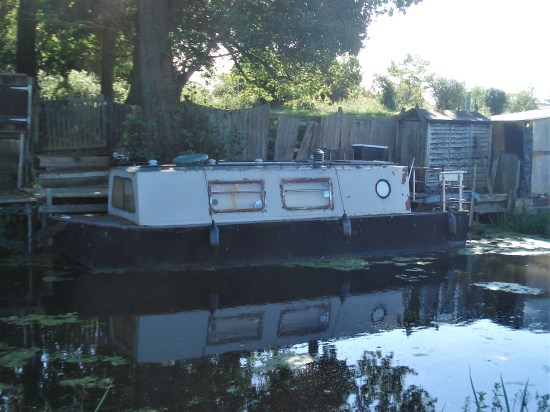
I eventually find a safe place near Moons Bridge Marina. I’m soon on the towpath which I remember as being very boggy a few winters’ ago. Today was all plain sailing, though that’s the last thing that some of the dilapidated barges moored alongside will be doing. DSC00353DSC00300

Leaving the canal at bridge 35 I take the lane leading to Bell Fold, an organic farm advertising free-range eggs, local honey and damsons. There didn’t seem to be an obvious shop, perhaps they were away for the day. As is common around farmyards there is an interesting collection of ancient and modern. Their collection of old tyres could grace The Tate. The ongoing lane must be one of the worst, I realise the muck I’m disappearing into is of animal origin rather than mud. I would imagine in winter it would be unpassable – very organic. Much, much worse than my photo portrays.Ā  DSC00356

DSC00308DSC00309DSC00312DSC00313

I’m looking for footpaths alongside Barton Beck. The bright yellow markers made it easy to follow even though the ground showed little footfall. As everywhere Himalayan Balsam is taking over, but I do like the aroma, especially on a hot day like today. The water is a little sluggish, but I spot shoals of ?minnows. DSC00315DSC00318DSC00320

I leave the field via an ornate gate onto a lane alongside the extensive grounds of Hollowforth Hall, I always admired this property without knowing anything of its history. (It is in fact grade II listed, mainly mid C19th but based on a much older farm building) There were always noisy peacocks strutting around. Over the intervening 50 years since my early visits most of the surrounding barns have been upgraded into country residences. DSC00324DSC00321DSC00326

I didn’t know whether I could use the ongoing unclassified lane leading to Park Head, but there aren’t any ‘No Access’ signs, so I walk on to reach the canal bridge where I drop down onto the towpath for the peaceful return leg. DSC00328DSC00329DSC00330

DSC00332

The canal has a healthy growth of a small yellow flowering water lily. Dragon flies were flitting around, but I never seem to catch them stationary for a picture, have a look atĀ this blog for how to capture wildlife.

Along this stretch of canal one has a three arched aqueduct over Barton Brook as it winds through this rural Lancashire. I go down to explore and judging from the flood debris not a place to be after heavy rain. Farther on is an old swing bridge connecting farm tracks across the canal and then the extensive Moons Bridge Marina where I started.

DSC00336DSC00337DSC00343DSC00344

DSC00364DSC00360All pure nostalgia and a pleasant way to spend a lazy summer afternoon – reassuringly not much has changed in this rural environment.

CaptureBarton

HEATHER – and other things.

20230821_153408

Mid-August already. I’m losing this year somehow. I head up the fell for a short afternoon amble but find a grouse shoot taking place on Gannow Fell. Not the big ‘driven’ affair with lots of beaters, butts and toffs, but the ‘walked-up’ variety. A few guns walk up the fell hoping to flush out the grouse. To be honest I rarely see a grouse on this patch of fell and talking to one of the helpers they haven’t had a good session. No sympathy there from me.

I fall back on the haven that is Cowley Brook Plantation. I’ve mentioned it before as a pleasant place to walk around. An old plantation owned by United Utilities who cut some of the timber a few years ago and planted more mixed woodland species. At the same time they have opened up access to the public and paths have developed within it. I like the idea of spontaneous path generation, not all of them going anywhere in particular,that is part of the charm of the place. It’s good to watch the development of the different trees as the years come by. Normally the place is alive with birdsong, but today all is quiet, perhaps the guns from across the way have frightened them. At least the brook is gurgling away. P1020138

DSC00290

Mountain Ash.

DSC00291

DSC00292

Oh, I forget, I titled this post ‘heather’ because of the sudden blooming of the fells up here. Most of the heather flowering at this time of the year, in various shades of purple, is Calluna vulgaris. One can smell the semi sweet musty aroma from the roadside. In another week or so there will be a haze of pollen blowing across the land. Get out and enjoy it while you can – providing they are not grouse shooting.

DSC00288DSC00287

20230822_143111

It may have passed your notice that Alison Rose, the NW Bank CEO, resigned recently as a result ofĀ  ‘a serious error’ relating to leaking Nigel Farage’s account. Yet today I read that she will still be paid a Ā£2.3 million compensation package. Maybe it is time to change banks – any suggestions?

This seems to be a recurring theme. Business managers, multi nationals and politicians profiting from their negligence at the cost to Joe Public. You and me.

My short walk has failed to put me in a good mood. Every thing should be beautiful.

“both the water of life and the river of death”

Amazon_logo.svg

The walkingĀ  and even the gardening has been put aside, and I’m spending a lot of time reading whilst it rains outside. My cousin has just published a comprehensive history of the parish of Bolton by Bowland. (Spot the B connection). He has lived there for many years and has spent much of his time researching the history, geology, genealogy, ecology and everything else interesting relating to the village and surrounding area. I’m already well through my complimentary copy and have learnt so much more of our nearby neighbourhood and English history in general.

(Our Craven Parish. Bolton by Bowland.Ā  John Pallister.Ā  ISBN 978-1-911138-39-6.Ā  Amazon doesn’t stock it. When I see John next week I’ll find out where it is available.)

That brings me to that other subject – my aversion to Amazon. I don’t like to be controlled by some giant all invading corporation.Ā  I have no wish to subscribe to Amazon Prime when I try to order a paperback. Can one control the internet?Ā  I suspect not. Unfortunately all of us are hooked, even by innocently reading this post you are being tracked. I use the independent Blackwell’s or Abe books wherever possible. I now find out that Abe, even though they support smaller suppliers, is connected to Amazon!Ā  What is the future for independent bookshops? They need the internet to sell their hidden volumes and yet Amazon must be contributing to the physical bookshops closing every week.Ā  “both the water of life and the river of death”Ā  is a quote from Simon Armitage, our current Poet Laureate

I’m presently into Simon Armitage, with an ongoing project to visit the Stanza Stones, his poems carved into Pennine rocks by Pip Hall. Ā http://www.stanzastones.co.uk/

Walking Home by Simon, his journey on the Pennine Way back to his home in Marsden. is a book I have just finished. A modern troubadour paying his way by poetry recitals in a variety of venues along the way. I found his writing engaging and romped through the volume. So it was back to Abe for the follow-up Walking Away. a similar trip bringing to life the SW Coastal Path. All Points North is a gritty and amusingĀ  predecessor. He certainly does have a passion for observation and words.

It’s still raining, so I will start on something different, the next book. Ā A Celebration of Lakeland in Winter by a John Pepper. A recommendation from George atĀ  Lakeland Walking Tales ‹ Reader — WordPress.com Ā That’s the value of blogging and linking into far more professional sites than mine.

My simple reading list is endless, and maybe I have added to yours.

THE CRAVEN LIME WORKS.

P1020519

I’m enjoying a lunchtime pint of Tetley Bitter in the Craven Heifer in Stainforth. The last time I was here was at the end of February 2020 when I stayed a night mid-walk.Ā  “It was Chinese New Year, and they were fully booked in the restaurant for a Chinese Banquet, but the chef was able to cook a fish and chip supper for me before festivities commenced.” There was talk in the bar of a new virulent virus spreading in China. We all know what happened next. P1020561

Hopefully the virus is now behind us, and it is good to be walking in Limestone Country. The barman says the pub closed during lockdown and only reopened under new managers last year. It is still owned by Thwaites, the present landlord has a five-year lease but grumbles that trade hasn’t really picked up. One problem is that the village is becoming dominated by holiday cottages, not many locals left, and the cottages are only occupied less than half the time. Who would want to run a pub in these cash strapped days?Ā  Ā  I finish my pint and bid them good day.

I’m halfway on a short walk mainly devised to explore the Craven Lime Works. It was only recently that I was made aware of this Industrial Heritage site on the delightful Walking Away Ā site. I must have walked and driven past dozens of times without realising its existence.

There is further information from these two sites.

Ā Visit Settle – Craven Lime Works & Hoffman Kiln “Without doubt the centrepiece is the huge Hoffmann Kiln. Built in 1873 it is a huge industrial scale lime kiln”Ā 

and more thoroughlyĀ  Craven and Murgatroyd lime works 400m north east of Langcliffe Mill, Langcliffe – 1020888 | Historic England

Good, that’s saved me trying to interpret and explain everything.

There is no signage off the road north of Langcliffe, but Hoffman Kiln RoadĀ  sounds promising, it leads to a large new purpose built office and light industrial complex in the grounds of the former lime works. A lot of money has been spent by Craven District Council, with help from European cash – we are going to miss that. I only hope this is a successful enterprise as at the moment the majority of the units are standing empty.P1020623

The almost hidden car park for the Industrial Heritage site is impressively large even with electric charging points. It is situated directly below the massive old quarry on the hillside that supplied all the limestone for the kilns. We used to climb up there in the distant past, I think that is discouraged now. Today I am the only car parked on the site. P1020635

P1020619

I wander into the ‘preserved’ site, the interpretation boards are very good. This has been a vast industrial complexĀ  – limestone from the quarries, converted in coal-fired kilns to lime which was transported off site by the integrated railway. As well as the kilns there are so many other associated ruins to see – inclines, winding houses. weigh bridges, water courses, tunnels, old rails, tram ways, spoil heaps.Ā  The operation lasted from the mid C19th to the 1940s.

Capturelome works1909

1907 OS map.

First I look at the remains of the buttressed bases of a pair of massive vertical Spencer steel kilns. Difficult to visualise the scale of this operation that provided purer lime from the beginning of the C20th. P1020508P1020507

Back round onto the quarry floor and a dilapidated weigh house. P1020514

And then along to the Hoffman Kiln – wow it’s massive, think football pitch. In I go, you don’t need a torch as the frequent limestone inlet arches give enough light, in fact a magic image. I’m enthralled. There are the ventĀ  holes for the smoke up to the now demolished central chimney; there are the holes in the roof for the coal inlets; there are the ageing firebricks; there are the miniature stalactites from the slow seepage over the years. Are there bats or giant spiders in here? I walk around the massive kiln twice, and even think about a third, this is so atmospheric. P1020629

P1020521

P1020624

P1020528

P1020529P1020527

P1020525

P1020543

P1020627

At the far end is a tunnel which accommodated a line bringing stone from the quarry above. A waterway used for counterbalancing a crane lower down delivering fuel into the kiln from the roof. Ingenuity far beyond our present engineers involved in the HS2 going above budget from week to week. They can’t even sort out the Euston terminus after 10 years, money down the drain, revised plans costing another Ā£5bn!Ā  How many cycle lanes could you build for that amount of money.

P1020534P1020535

The only part of the complex that wasn’t viable was the separate Murgatroyd quarry and overhead triple kiln next to the railway at the northern end of the site. A smaller scale operation which collapsed in 1887. Today I couldn’t make out the tops of the three kilns for the abundant vegetation, I realise now I should have dropped down to see the lower outlet of the kilns. P1020548

P1020549

Industrial history satisfied I walk through the fields up to Stainforth and my pint. I come back, not on the familiar riverside path but on a higher way through Stainforth Scar. Gently climbing out of the meadows into the trees on the scar and emerging on the limestone plateau. The way ahead is etched into the fields, signs of an ancient passage way to Winskill Farm. 1675 says the date stone with the initials NBCB. What history could these walls tell. It is surrounded by what look like traditional meadows with a variety of flowers and butterflies.P1020569

P1020590

P1020587

P1020573P1020558

From up here looking back over my right shoulder is the prominent Smearsett Scar and distant Ingleborough. Over my left shoulder Pen-y-ghent has suddenly appeared quite close by.P1020579P1020581

There are some tempting ways leading to Attermire Scar from here, but I’m only looking for a short day. My path is clear through stiles in the extensive network of fields and old lanes. The view is down the shallow valley with its patchwork of fields to Langcliffe. That’s where I was planning to head, part of Wainwright’s Pennine Journey, until I spot a vague path/sheep trod going between a wall and the Langcliffe Quarry, now alongside. Will it take me on a shortcut?Ā  I said I was looking for a short day especially after that pint. Worth a try and yes it brings me out into the Lime Works without any serious obstruction, but don’t necessarily follow me on any of these walks. Mine was still the only car in the car park.P1020596

P1020592

P1020601

P1020608

P1020603

P1020617

I would highly recommend a visit to the Craven Lime Works with or without a walk.

***

CaptureHoffman Kiln. (3)

LEVEL FROM LEVENS.

P1020382It is good to meet up with Sir Hugh again. He has been out of action but keen to get going once more, I plot a fairly easy level route from Levens of about 4.5 miles, characteristically he promptly suggests extending it farther. We made the wise decision to cancel on Friday, it rained non-stop. We will take our chances today.

He knows where to park and off we go through Levens Hall Deer Park above the River Kent. I’ve been this way before but struggle to remember when. Just found itĀ here and guess what it was with Sir Hugh, his memory is no better than mine. That day we had good views of the Bagot Goats and the Black Fallow Deer, not so successful today. We admire the ancient trees as we slowly gain height, there is no such thing as a level walk, Sir Hugh doesn’t seem to notice or let on, (re the height not the trees)

P1020356

River Kent.

P1020357

Ash.

P1020362

Sweet Chestnut.

P1020360 (2)

How insignificant we are.

Soon we are on the Lancaster Canal though no boats come this far. It is level now for the next couple of miles as we pass under the landlocked bridges. We look across to Sedgwick House and the nearby skew bridge below us, marvelling at the canal builders’ skills. P1020370P1020373P1020374

And who is this coming towards us? My cleaner and friend with dog. Pleasantries are exchanged , she has a caravan near here to escape to. P1020377

P1020379

Some time is spent trying to capture on film young martins being fed. This is the best I can do.P1020397P1020405

Leaving the canal we go down the lane to Hawes Bridge and admire the limestone geology in the river bed. P1020413P1020410

A seat under a spreading oak is taken for lunch, we are sheltered from the only passing shower of the day. A delightful stretch of the Kent is followed, we spot a perfect pitch for a backpacking tent. Perhaps those days are over for us. P1020414

We change sides courtesy of a swinging suspension bridge. Along this lane there are tantalising views of some waterfalls through the limestone. And then under the motorway close up on the river, there appears to be access from the opposite bank, worth further exploration. P1020419P1020420P1020421P1020424P1020426P1020428

Here is the hill I was concerned about, Sir Hugh cruised up it, but he did stop talking for a while. Now back into Levens Park and soon back at the car. P1020432P1020436P1020438

Almost a picturesque walk in the Victorian sense.

Here is Sir Hugh’s alternative report.

Statistics. A good 6.4 miles and on my reckoning 260ft of ascent according to the OS app, his Memory Map app gave 550ft. So much for modern technology. I manually counted the contours and came back to the lesser figure. The debate goes on, but there is definitely no such thing as a level walk. The advantages of modern technology are that I can write this whilst listening to the BBC Test Match commentary (Duckett’s just out for 83), picking up emails and keeping an eye on the British Bouldering Competition in Sheffield. Who says men cannot multitask?

***

CaptureLevens. (2)

CICERONE’S LANCASHIRE – GRAGARETH’S MEN.

P1020312 (2)

Well there were JD and me, the three scientists doing a peat survey for some research organisation, the Three Stone Men who have been there for who knows how long, and a few others stone ones scattered around. The peat survey was interesting as we are just waking up to the importance of peat as an important carbon storage resort. We were happy to sit in the shelter of the Three Men as there was a distinctly cold breeze coming from the Northwest. A good opportunity to take a break and eat our sandwiches.

Our journey up the motorway had not been straight forward as I missed the turn-off to Caton and the Lune Valley. Another junction farther north and JD’s phone chose an alternative route over towards Kirkby Lonsdale, although eventually on the A65 we ignored the lady navigator and followed the sign up to the little hamlet of Ireby.Ā  I shall not reveal where we parked, but there should be space by the telephone (book) box. Surely we are in Yorkshire by now, but no the Lancastrians have pushed a finger into Cumbria and Yorkshire.Ā  We are in fact out to climb the highest (allegedly) hill in the Red Rose county, walk number 16Ā in Mark Sutcliffe’s Cicerone guidebook.

Up to now we have been walking on a distinct lane out of Ireby and then the tarmac road heading up the fell from Leck. All easy going, gaining height almost effortlessly, at least we could keep up a good conversation without getting out of puff. JD is super fit at the moment having recently completed a pilgrim route to Santiago, a Scottish trip and The Dales Way. I was hoping that his all-inclusive hotel stay in Menorca with his wife might have slowed him down. We are in limestone territory. P1020289P1020292P1020298

This road leads to a remote sheep farm. I used to park up along here for exploring the nearby Leck Fell potholes. Short Drop Cave was always a favourite, lowering yourself in with your feet dangling in fresh air in the darkness, dare you let go of the rock? Of course, you did and only dropped a few inches! You could explore the channel for some distance and then worry about getting out again. But today we were heading up to those stone men visible on the hillside above. Conversation dwindles on the steepest scrambling bit, look at the contours, and we are all too ready for that rest at the Three Men. P1020305

P1020310

The Three Men.

P1020321

The Three Ladies.

P1020315

Lunch over we chat to the peat surveyors before strolling the last section to the lonely trig point on Gragareth, 627 m, the highest in Lancashire. Now this is where some debate comes in, farther north across the barren moor is Green Hill, still in Lancashire, and marked on the OS map as 628 m. We don’t fancy the two-mile boggy trudge up there. But help is at hand – in 2014 the Database of British and Irish Hills suggestedĀ  ā€œGragareth replaces Green Hill as Lancashire county topā€.Ā  Gragareth having a height of 628 metres, 100 metres east of the trig point, while Green Hill is 627.5 metres. Who knows?Ā  P1020324

Anyhow, we slink off along the wall southwards. But I have forgotten to tell you about the views from that highest point. Morecambe Bay, Lakeland hills, nearby Barbon fells, all those rounded hills up to Dentdale, Whernside and of course stately Ingleborough, distant Pendle and the Bowland Fells, quite a collection.

P1020323

Northwards.

P1020334

Whernside.

P1020329

Ingleborough.

On down along the wall and then a vague path down to the ‘Turbary Road’ above Kingsdale, a track used by peat cutters – yes we have been destroying the land long before climate change was thought of. This area is full of caves, potholes and dry riverbeds, but the way missed most of them out. On reflection a few small diversions to peer into these limestone features would have added interest. P1020331

P1020338

P1020339

Marble Steps Pot.

P1020345

Twistleton Scar End.

P1020344

Turbary Road.

Once on the lane we made good progress stopping only at a bench for a drink, out of the vegetation crept a giant dung beetle. P1020348

Masongill looked delightful.P1020349

Freshly cut green fields, and we were soon crossing the ancient clapper bridge into Ireby.

P1020350P1020353

It was good to be back in Limestone Country, as you can see the weather improved as the day went on. Eight and a half miles with 1700ft of ascent – I’m still thinking imperial.

***

CaptureGragareth (2)

CICERONE’S LANCASHIRE – ?FORBIDDEN BOWLAND.

P1020180Sat alone on the isolated true summit of Fairsnape, deep in Bowland, I’m poking at one of my sandwiches, egg and tomato, made a month ago. They went into the freezer when hot weather and circumstances cancelled an outing at the last minute only for them to re-emerge this morning. there is a distinct unappetising taste.Ā  Should you freeze hard-boiled eggs? I’ve just traversed some of the loneliest hills up here and am in need of some sustenance.Ā  The morning has been misty on the fells, however with a welcome cooling breeze. Distant views are restricted from my lofty perch, most of you will never have been here. Only a few curlew and grouse share my space. I poke again at the sandwich and decide to toss it into the heather for probably the seagulls, who now also patrol these heights, to scavenge.

As I say the day started off murky and cool with low cloud, quite the opposite of the mini heat wave we have been enduring. Ideal for a tramp across these Bowland hills. For a start don’t take Mark’s advice to leave your car in the Delph Lane car park, it’s none too safe and leaves you with quite an uphill walk before you start. There are suitable lay-byes nearer Stang Yule. Walk number 2 in the Cicerone’s Walking in LancashireĀ  book.

The way starts at a gate leading onto open access land. Welcome. On closer examination a notice says ‘No open access – temporarily closed at the land manager’s discretion’ Not aĀ  good start at all. But wait, the date is 2021. This sign has not been removed or updated for two years. So much for the land manager.

P1020163P1020274

I try not to read too much into this as I stride boldly onto the access land. Nobody will see me in the mist. I’m enjoying the heather under foot, there is a path of sorts but not many come this way, put off by that notice possibly. Slowly I gain height and pull away from the plantation onto the open fell side, A track takes me across the slopes of Hazelslack Fell, a rarely visited spot. The last time I was up here was with Sir Hugh and JD on our straight line adventure between our homes. It’s as remote as I remember. P1020165

P1020169

The views back to the Fylde are supposed to be good.

P1020183

Approaching Hazelhurst Fell.

P1020186

Looking back with the track skirting below the summit of Hazelhurst.

I don’t bother with the 429 m trig point this time as I’m probably going higher shortly. The track dips down and climbs the contours gradually onto Winny Bank. The raison d’ĆŖtre for this track becomes obvious with the appearance of shooting butts. Not only the butts but also the small mammalĀ  traps, thankfully decommissioned. The highlight of my week, if not the month, was witnessing a family of Stoats crossing a road on Longridge Fell. Distinctive with their black tipped bushy tails. Who would want to trap and kill these beautiful animals?? P1020188P1020189P1020197

Along the way is a stark memorial to airmen lost on these hills in WWII, I have a book somewhereĀ  listing all these crashes and giving their accurate sitings. P1020196

The track starts to descend, and I have to be alert to pick up the ongoing path to Fairsnape otherwise I would be floundering, I know not where. The path begins somewhat unlikely with a few steps leading off a turning place. The stone flags don’t go far and one is left following intermittent white posts through the morass of peat. You will be glad you came here in dry weather, preferably a draught, also not a good place to be in thick mist. Stick with it, and you will arrive at a fence corner euphemistically namedĀ  Webster’s Meadow. (if you miss it you would be in ‘Dickey’s Meadow’) This is also known as Fiensdale Head, the way through from Langden to Bleasdale. A partially flagged path shows the way. it’s a long time since I’ve been down Fiendsdale, a good spot to see ring ousels. No idea who Webster was or Dicky for that matter.

P1020199

Turning spot.

P1020200P1020201

P1020205

The way down to Fiendsdale.

United Utilities have an information board explaining the work being carried out to try and reverse some of the peat erosion. When I was last up here they were helicoptering bags of stones in to be incorporated into ‘dams’, stopping further erosion from run off and re-wet the surrounding peat. Evidence of that work is all around with stone and fibrous matting in the peat cloughs. One does wonder how much we can do to repair the damage which must be on a vast scale in Bowland alone. Are you still able to buy peat based compost – I hope not? P1020204

P1020214P1020216

A few more flags are encountered, showing a way down to Bleasdale and ahead to Fairsnape. Then you are on your own again with the fence for company. The book talks of ‘hard going’ in the peat hags – ‘hopping over to the other side of the fence may help’ Today that is not necessary as it is as dry as it is going to get, but there are still boggy morasses you wouldn’t want to fall into, perhaps the re-wetting is working. Knees are allowed for climbing out of the deepest hags. P1020213P1020208P1020221

Anyhow, I’m soon sat at the 520 m summit contemplating my lunch. There is another informative board up here telling the same story. Some of the funding came from the EU, pre Brexit. How much will our own DEFRA run by ThĆ©rĆØseĀ  Coffey put into environmental schemes? P1020222

It’s a dry run over to the other summit of Fairsnape, the one with the shelters and trig point. I’ve not seen anybody all day so far and can’t believe I’m the sole person at this popular top. Only when I get closer to the shelter do two heads pop up – a young couple having some private time to themselves. P1020228

The mist has lifted a little allowing the gliders from the club down below to take to the thermals, spookily and silently sliding past out of the thin cloud. P1020226

The way off, by a cairn, is down some zigzags into Bleasdale. I have always assumed these to be part of a sledging route for bringing cut peat off the fell. Beautifully constructed and a joy to walk whichever direction, up or down. Few people used them as most are linking Fairsnape with Parlick along the ridge. But Mark knows this area well, covering Bowland in detail, the secret is out. P1020230P1020232P1020241

P1020243

P1020259P1020273

What a contrast from the northern side of the fells – endless peat and heather as far as the eye can see and down here in Bleasdale with the green pastures stretching to Beacon Fell. The guide book takes you on tracks that would give access to Bleasdale Circle, but I’ve been there manyĀ times and at the moment it is a bit of a mess following storm damage to the trees, so I take a slightly different route through Bleasdale, past remote farms, past the old reformatory school buildings and past Bleasdale Tower. North Lancashire Reformatory for Boys, Bleasdale, near Garstang, Lancashire (childrenshomes.org.uk)

P1020278

That little lay-by.

The little blue car was waiting for me in that lay by, as a Duke Of Edinburgh group were going through, staggering in the heat under massive rucksacks. I wonder who had the better day?

***Capture Hazelhurst (2)

TOMORROW STARTS TODAY, A LONGRIDGE LOOP.

P1020116 (2)

It is a month since I have done a ‘long walk’. Health issues combined with all that heat kept me in doors. I’ve only managed a few walks of a couple of miles or so, enjoyable nonetheless in their own rights. Tomorrow I hope to take up the cudgel of another possibly strenuous Cicerone’s Lancashire walk. So I had better have a gentle warmer up to get my legs back into shape.

From my header photo you can see that the hawthorn flower has given way to the elderberry.

Juggling with the weather I need to get going before the afternoon rain comes in, our gardens need it. (it never arrived)

Let’s keep it simple and walk up the lanes from the village onto Longridge Fell. I’m only out for the exercise after all. Park at the little reservoir, Upper Dilworth, stop to watch the female tufted duck with her brood and then a brisk walk-up past the golf course onto Jeffery Hill. I can’t resist a look into Cardwell Quarry to see if the barn owl is still there. A couple of weeks ago I looked in and took a hurried photo of the roost which showed up the owl’s legs but nothing more! Today nothing at all. I sat for a while taking in the view over Chipping Vale and remembering all those summer evenings climbing up here with Longridge mates. It’s banned now due to some unfortunate contretemps between the landowner and some selfish youths. It doesn’t take much to destroy all the goodwill built up in the past. P1020112P1020115P1020128P1020130

P1010903

Two weeks ago – spot the legs.

Close by here the Roman Road was thought to have come up from Ribchester before a turn to head through the hills towards Newton, and then over to Lancaster. It is marked on the OS map, and today I can make out the line of it just below the modern road. P1020119

P1020132 (2)

Surprisingly there is only one car parked up on Jeffrey Hill where the walk-up onto Longridge Fell starts. I never meet the occupants. Taking the ‘balcony path’ along to the spring and then heading towards the ridge, it is bone dry. I am tempted to carry on up to the trig point, but sense tells me to go easy and besides I can see rain coming in across the Fylde Coast. Back down alongside the wall, past the ‘grim up north’ tree.Ā 

P1020125

P1020134

Straight across and alongside the upper trees of Cowley Brook Plantation. This plantation is becoming a favourite of mine for an evening stroll, and today I cut down through it meeting up with the brook where it disappears under the road. P1020137P1020138P1020140P1020143

This road takes me eventually, there are lots of ups and downs, back to the village, passing the lower side of the manicured golf course this time.

P1020155P1020156

P1020158

Job done, now let’s see what the forecast is for tomorrow.

CaptureLOngridge Fell.